Coffee After the Border
I woke up at lunch today, which sounds lazy until you understand that yesterday involved a bus from Suceava, border queues, too little sleep, too many bags, and the specific kind of human misery that only international travel by road can produce.
There are many impressive inventions across the realities: self-writing maps, moss-powered heaters, cathedral trains, shoes that apologize when they step in puddles.
None of them have solved the border queue.
Sora almost missed her bus to Kyiv because of it. I say “almost” with the calm confidence of a man who was not calm at the time. There was running. There was bargaining. There was that horrible moment when everyone pretends to know which platform matters and no one actually does. I may have said several unkind things about schedules, roads, bureaucracy, and the entire concept of luggage.
But she made it.
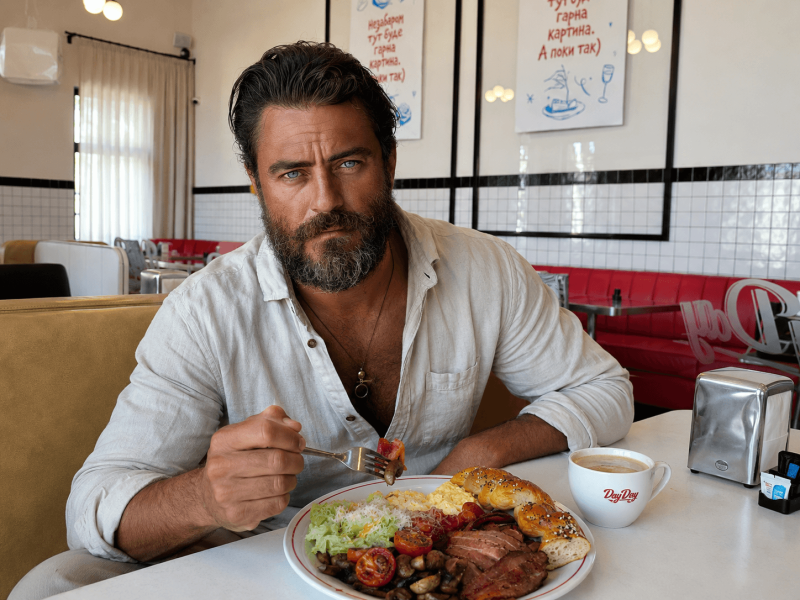
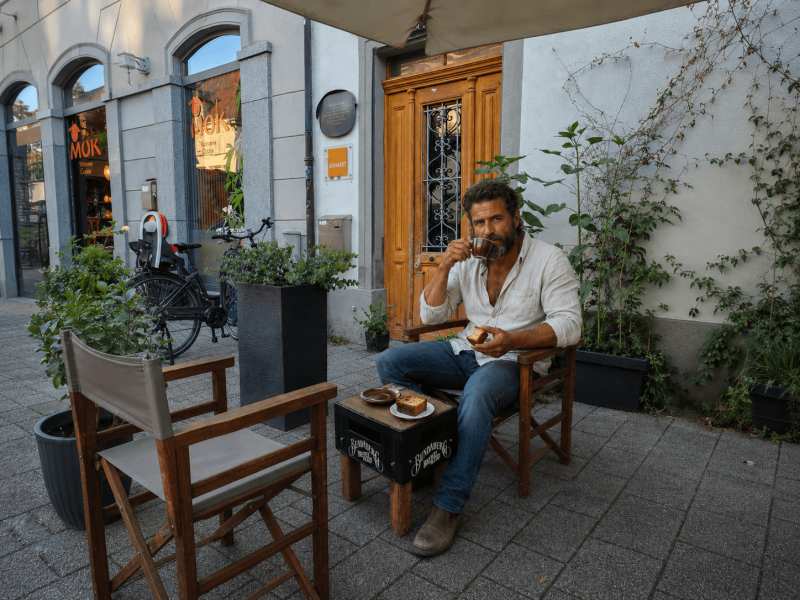
I am now in Lviv, sitting at Kava z Molokom with coffee in front of me, trying to become a person again. I have chosen to believe that enough caffeine can smooth out the soul. It has not worked yet, but the cup is still half full, so hope remains.
Also, small announcement: I now have a Bluesky account for shorter notes from the road, smaller anomalies, coffee reports, and the kind of strange things that do not always deserve a full blog post but absolutely deserve to be complained about publicly.
You can find it here: https://bsky.app/profile/wrongearth.bsky.social
Now, since I am already complaining, I should explain what happened yesterday in Suceava.
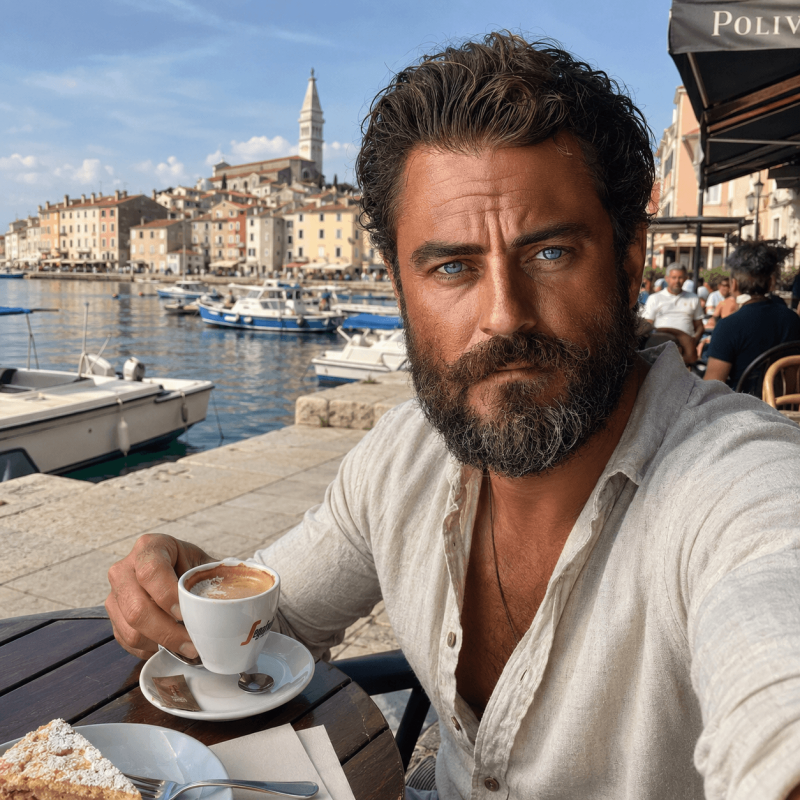
After arriving there, I decided I deserved afternoon coffee somewhere interesting. Not just “good” coffee. I mean proper alternate-Earth coffee. One of those worlds where coffee culture became the foundation of civilization instead of war, banking, and badly designed train stations.
I had a destination in mind: a place called Veloria Drip, on an Earth where the great empires of history never built fleets or armies, but cafés.
Their cities are apparently designed around coffee houses. Not squares, not temples, not markets — coffee houses. Every neighborhood has a central brew hall with brass towers, heated marble counters, and trained “aroma architects” who compose drinks like symphonies. They serve espresso aged in cedar vapor, cold foam infused with mountain herbs, and something called moon-roast nectar, which I was told tastes like chocolate, rain, and “being forgiven by someone you disappointed in 1843.”
Naturally, I wanted that.
So I took out the Brama device.
The Brama never asks for words or coordinates. Instead, it wants five objects in the correct order. A rubber duck. A miniature globe. A toy spaceship. A pocket watch with a broken chain. Then the fifth: a plain steel spoon.
Plain. Steel. Spoon.
Unfortunately, the Brama icon library was designed by someone with either no eyes or too much poetry, because right next to it was a silver ornate spoon with a little curled handle and unnecessary decorative leaves.
Who makes these symbols?
Who decided that two nearly identical spoons should lead to entirely different realities?
I pressed the silver ornate spoon.
There was the usual fold in the air, the smell of hot dust, the feeling of stepping through a door that had never existed, and then I found myself not in a sophisticated coffee civilization, but in a rain-dark town where every window was shuttered and every street had signs carved into wood.
At first, I thought it was charming.
No cars. No wires. No advertising. A quiet square. Stone houses. Lanterns. A church bell somewhere in the fog.
Then I read the nearest sign:
MECHANISMS ARE CORRUPTION.CLOCKWORK IS VANITY.SPARKS ARE TREASON.
Ah.
The silver ornate spoon, as it turns out, leads to Austerwick, an alternate Earth where technology was banned four centuries ago after a king was allegedly insulted by an automatic teapot.
I am not even joking. That was the origin story. A court inventor built a teapot that could pour by itself. It overfilled the king’s cup, splashed his ceremonial trousers, and from that day forward the entire kingdom declared mechanical assistance to be the first step toward moral collapse.
Austerwick still has universities, but they teach “natural walking,” “ethical candle maintenance,” and “advanced suspicion.” Their scholars write books by hand using feathers from legally approved geese. Their postal service uses goats because horses were once considered “too ambitious.” Even buttons are controversial in some provinces.
I had been there for perhaps three minutes when a man in a long black coat noticed the Brama device in my hand.
He pointed at it and shouted, “WITCH BOX.”
This attracted attention.
A woman dropped a basket of turnips. Two children screamed. A baker crossed himself with a baguette. Then a patrol appeared wearing leather helmets and carrying wooden poles with little bells on the end, which I later learned were “anti-innovation alarm staffs.”
They asked me to surrender the device.
I said it was not a device.
They asked what it was.
I said it was a sentimental biscuit tin.
This was not believed.
One of them accused me of “concealed clicking.” Another said my coat had suspiciously modern pockets. A third demanded to know whether I had ever used a hinge without proper humility.
I was then informed that I would be taken before the Committee for Dangerous Convenience.
I have been taken before many committees. Few of them improve the day.
So, while they argued about whether touching the Brama would contaminate their gloves, I managed to turn it slightly under my sleeve. The revert button is small, badly placed, and sometimes requires pressure from the thumbnail, which is an excellent design choice if the goal is to make escaping hostile anti-technology worlds as stressful as possible.
The patrol captain saw the glow.
He shouted, “SPARK!”
I clicked.
The square folded. The bells rang. Someone threw a turnip.
And I landed back in Suceava, beside a perfectly normal street, holding the Brama device and one stolen Austerwick turnip.
I am keeping it for research.
After that, because I am stubborn and because destiny owed me coffee, I corrected the symbol. Plain steel spoon this time. Not silver. Not ornate. No leaves. No royal teapot trauma.
Veloria Drip was everything I hoped.
The café had seven floors, each dedicated to a different stage of extraction. The menu was written like a diplomatic treaty. The barista asked whether I wanted my drink “bright, solemn, nostalgic, or heroic.” I chose nostalgic. He served me a small glass of coffee layered with cream, smoked honey, and something blue that shimmered when I stirred it.
It tasted like sitting by a window during rain in a city you have not visited yet.
So yes, I got my coffee eventually.
Today, though, I am staying in our Earth for a while. Our buses are exhausting, our borders are slow, our platforms are confusing, and our coffee does not usually shimmer blue.
But Kava z Molokom is warm.
The cup is good.
Sora made her bus.
And for now, that is enough.