The Day Lviv Itself Said “No, Actually”
I had done everything correctly.
This is important.
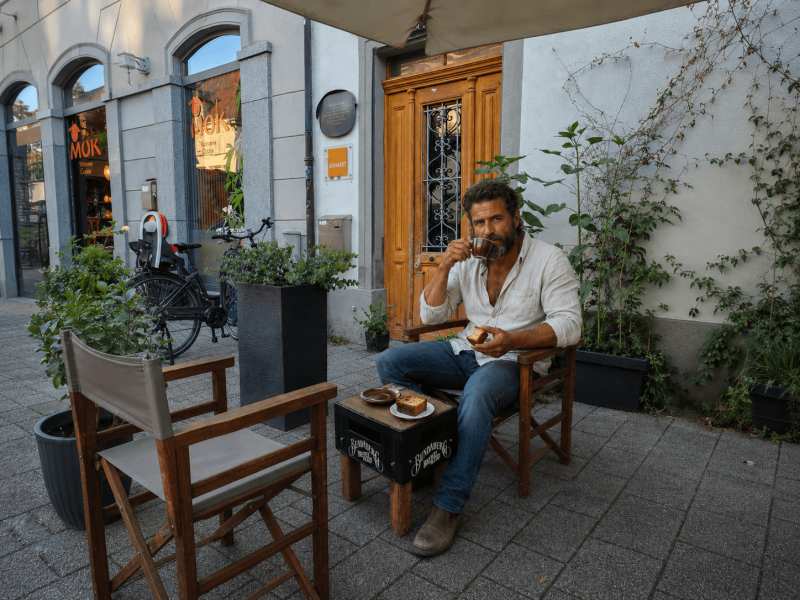
I had excellent coffee at Kredens on Valova. Not “good.” Not “acceptable.” Excellent. The kind that makes you briefly forgive humanity for inventing meetings.
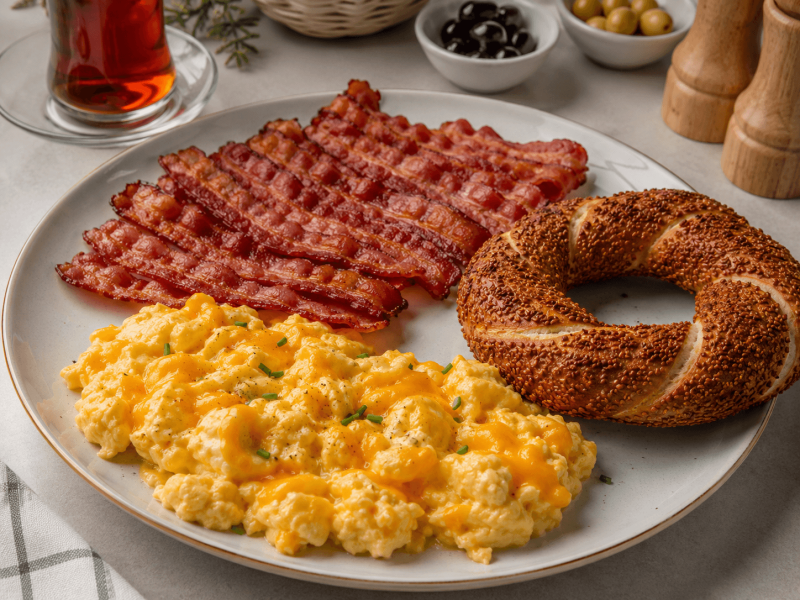
Then sirniki.
Soft, golden, slightly crisp edges, the kind that make you wonder whether some grandmother has been legally trapped in the basement solely to maintain quality standards.
So naturally I decided to walk toward Rynok Square.
It was one of those Lviv walks where the city performs for you.
Wet cobblestones. Balconies looking mildly judgmental. A tram somewhere making sounds like a mechanical philosopher in distress. Tourists with umbrellas they absolutely bought five minutes earlier.
Then it started raining.
Now, if you are not from Lviv, you might think:
"Oh no! Rain!"
That is adorable.
Lviv rain is less weather and more recurring architecture.
I dismissed it immediately.
“Classic,” I muttered, putting my hands in my pockets and continuing like a man with no survival instincts.
That is when reality began to misbehave.
First, the colors changed.
Not dramatically.
Not cinema dramatic.
Subtle.
The red tram became less red. Stone buildings went gray. The air felt… thick.
Like someone had replaced atmosphere with old dishwater.
Then I saw it.
A gray blob.
That is the technical term.
About the size of an aggressively unhappy wardrobe, pulsing near a side street as if indecisive about existing.
And then gravity did something deeply rude.
I was yanked sideways.
Not “lost balance.”
YANKED.
Across wet stones like a discounted suitcase.
And I was not alone.
Three other people got collected by whatever nonsense this was.
Two girls, maybe mid-20s.
One in a green jacket clutching a shopping bag containing what I later discovered was cosmetics and two emergency croissants.
The other wearing white sneakers already ruined forever.
And one guy, late 20s, glasses, expression of a software engineer who had specifically planned not to deal with dimensional incidents that day.
We landed in a heap.
“ЩО ЦЕ БУЛО?!” shouted Green Jacket.
“NOPE,” said Glasses.
A perfectly valid philosophical position.
I stood up, dusted myself off, and announced:
“I have a theory.”
“Already?!” asked Sneakers.
“Yes.”
“What is it?”
“Bad luck.”
Blank stares.
“And,” I continued, “special water.”
“...what?”
“Lviv rainwater. Clearly mixed with cursed minerals.”
The software engineer looked at me the way one looks at a man explaining tax law via astrology.
Then we looked around.
Friends.
This was not Earth.
Well.
It was Earth in the same sense that gas station sushi is technically food.
Buildings leaned at slightly wrong angles.
Street signs contained letters I recognized emotionally but not linguistically.
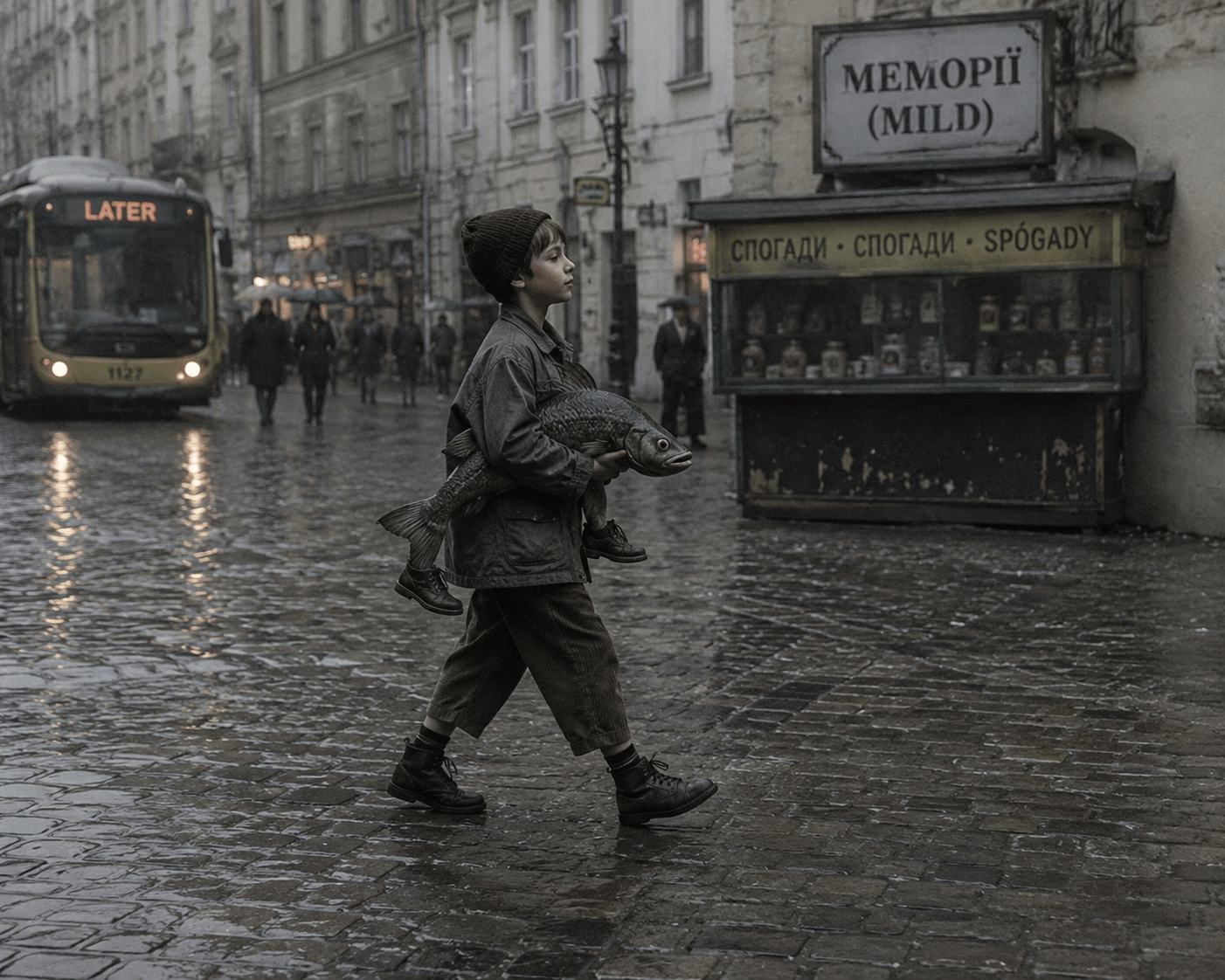
A bus passed that simply said:
LATER
No route number.
Just a threat.
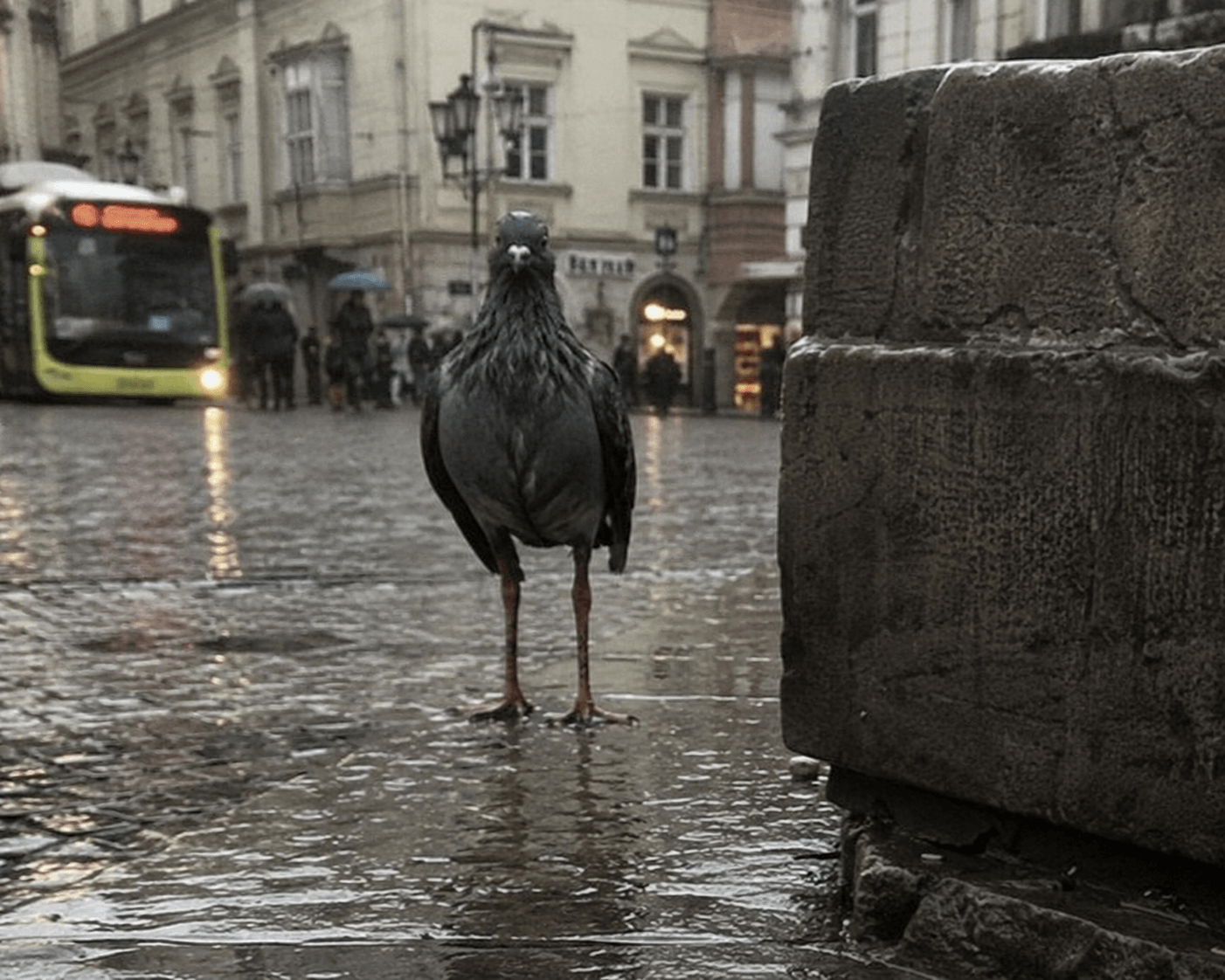
A pigeon with disturbingly long legs watched us from a lamp post.
One of the girls whispered:
“Are we dead?”
“Too damp,” I said. “Afterlife has better drainage.”
The sky looked like someone had washed all blue out of existence.
A kiosk sold jars labeled MEMORIES (MILD).
A child calmly walked past carrying what I can only describe as a fish wearing shoes.
Glasses finally asked:
“Do you know what is happening?”
“No,” I said.
Pause.
“But I am excellent in emergencies.”
This was not strictly supported by evidence.
The blob had followed us.
Now larger.
Pulsing.
I realized it reacted to panic.
Which explained why it was having the time of its life around us.
So I did what any trained Clovis field operative would do.
Improvised wildly.
“Everyone,” I said, “think of something extremely boring.”
“WHAT?”
“Taxes. Printer drivers. Queueing in government offices.”
Green Jacket immediately nodded.
“Passport renewal.”
“Excellent.”
The blob visibly recoiled.
Ah.
Emotional parasite.
Good.
I pointed at the software engineer.
“You. Think enterprise licensing.”
He went pale.
The blob shuddered.
Direct hit.
Sneakers was panicking.
I grabbed her shoulders.
“Tell me the dullest thing you've ever done.”
“Inventory count in my aunt’s curtain shop.”
“Perfect. Hold onto that.”
The blob collapsed inward like a deeply offended soufflé.
Then—
snap.
Rain.
Real rain.
Lviv rain.
We were back.
Same street.
Same cobbles.
Same tram, still sounding emotionally complicated.
All four of us stood there soaked.
Silence.
Then Glasses said:
“…what the hell.”
“Saturday,” I replied.
At this point I felt responsible.
Also hungry.
So I announced:
“Good news. I am buying dinner.”
“Why?” asked Green Jacket.
“Because shared trauma builds community.”
So off we went to Gasova Lampa, Lviv’s glorious gas-lamp-themed restaurant-museum where apparently subtlety goes to die in magnificent fashion. Their whole concept is built around Lviv’s historic gas lamp invention, complete with absurd atmosphere and chemistry-alchemist energy.
Inside: lamps everywhere.
If a lamp had grandchildren, they were probably also there.
The waiter looked at our soaked appearance and wisely asked no questions.
Dinner became serious.
Glasses ordered braised beef because apparently interdimensional displacement increases appetite for protein.
Green Jacket ordered pork schnitzel with the determination of someone reclaiming control over her life.
Sneakers chose baked chicken wings and immediately recovered psychologically.
I ordered solyanka because if reality is unstable, soup helps.
Also the infamous infusion tasting set in test tubes appeared because clearly our day had not contained enough questionable science.
Dessert happened.
Alcohol jelly.
Questionable but charming.
Coffee called something smoky and dramatic.
We talked for hours.
By dessert we had names.
Yulia (Green Jacket). Oksana (Sneakers). Taras (Glasses, unsurprisingly).
Taras eventually asked:
“So who are you actually?”
And that is always the dangerous question.
“Consultant,” I said.
Which remains technically true in the same way saying a crocodile is “somewhat enthusiastic.”
We were just finishing when the waiter arrived with the bill in a theatrical metal holder shaped like something an alchemist would threaten students with.
I reached for it.
Taras immediately protested.
“No, no, absolutely not.”
“My dimensional incident, my bill.”
“You did not create the dimensional incident.”
“Debatable.”
Yulia laughed into her drink.
Oksana, now fully restored by chicken wings and questionable liqueur chemistry, leaned forward.
“Wait. Was any of that real?”
A very fair question.
Because once you are warm, fed, and no longer being hunted by emotional fog, the human brain starts doing sensible things like denial.
“Maybe we all slipped on Valova and hit our heads in synchronized fashion,” Taras offered.
“Mass sirniki poisoning,” I suggested.
“Special Lviv mushroom coffee?” said Yulia.
“Government weather experiment?” Oksana added.
“Too organized,” I said.
The waiter returned with dessert no one remembered ordering.
Some flaming thing involving caramel and enough alcohol to alarm aviation authorities.
“Compliments of the house,” he said.
“Why?” asked Taras.
The waiter shrugged.
“Manager says Mr. Marco is always welcome.”
Silence.
I had never been here before.
Taras slowly turned.
“...always?”
I stood up immediately.
“Time to leave.”
Outside, Rynok Square was magnificent.
Rain had stopped.
Cobblestones reflected lantern light.
Tourists wandered.
Someone played violin badly but passionately.
Entirely normal.
Almost.
Then Oksana pointed upward.
One of the gas lamps across the street flickered.
Not yellow.
Gray.
Just for a second.
Then normal again.
“Did you see that?” she asked.
“No,” I said far too quickly.
Taras narrowed his eyes.
“You absolutely saw that.”
“Lviv has excellent atmospheric theatre.”
Yulia folded her arms.
“You know things.”
“Sometimes.”
“Should we be worried?”
I considered this.
Then smiled.
“No.”
“Why?”
“Because whatever that was…”
I looked toward the lamp.
“…it clearly has excellent taste in cities.”
And then, because some exits should be dramatic, I walked into the rain and took the wrong tram on purpose.