Field Note from the World That Speaks in Bass
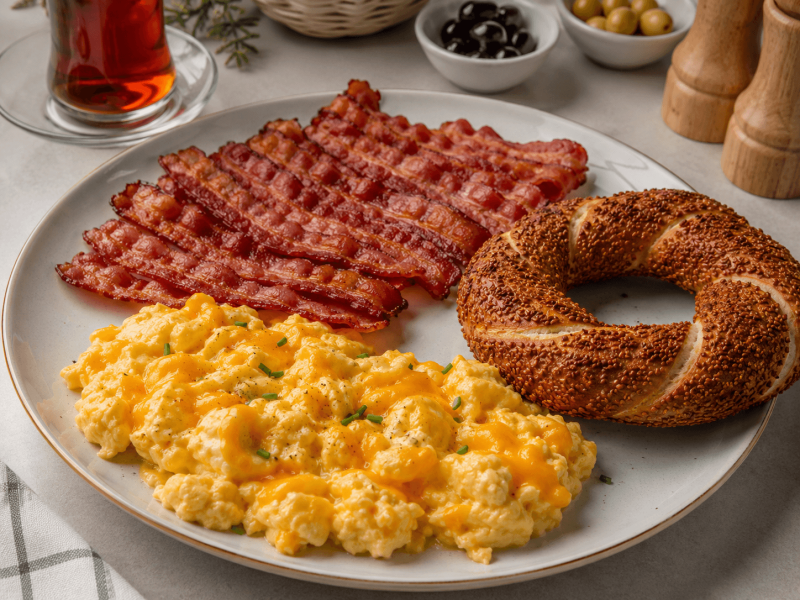
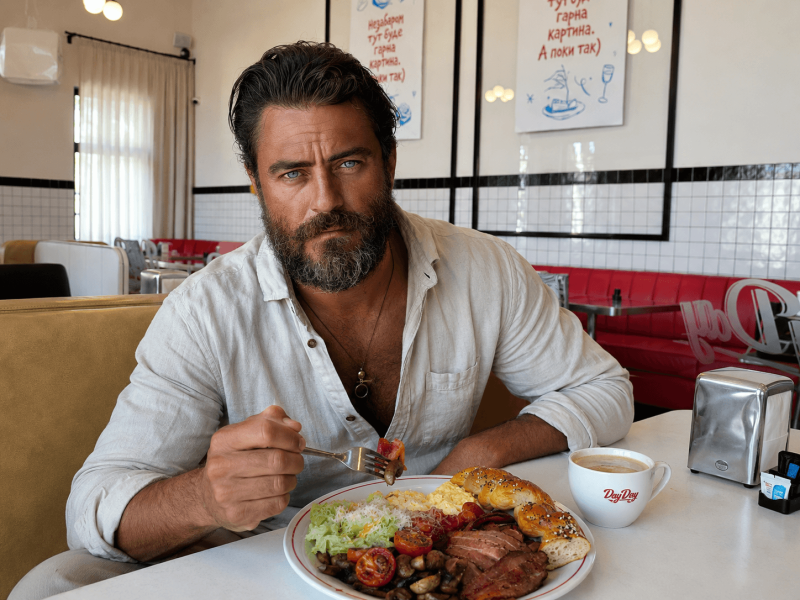
I began the morning at the Ibis breakfast buffet in Lviv with the kind of discipline normally associated with collapsing empires.
The official plan was simple: wake up, eat something sensible, drink coffee, read the day’s mission notes, then proceed with dignity into the multiverse.
The actual plan became: eggs.
Then more eggs.
Then bacon.
Then a small return to the eggs, because the second tray had arrived and it looked fresher, which is a dangerous word at a buffet. Fresh eggs at a hotel buffet produce a moral challenge. One does not want to be greedy. One also does not want to offend the tray.
I solved this by pretending the mission required protein.
By the time I finished, I had consumed enough breakfast to make the Laminas device hesitate when I picked it up, as if calculating whether my mass still matched the person registered to its user profile. The device showed the normal icons, then briefly displayed what looked like a warning symbol shaped like a pig wearing a crown.
I chose not to investigate.
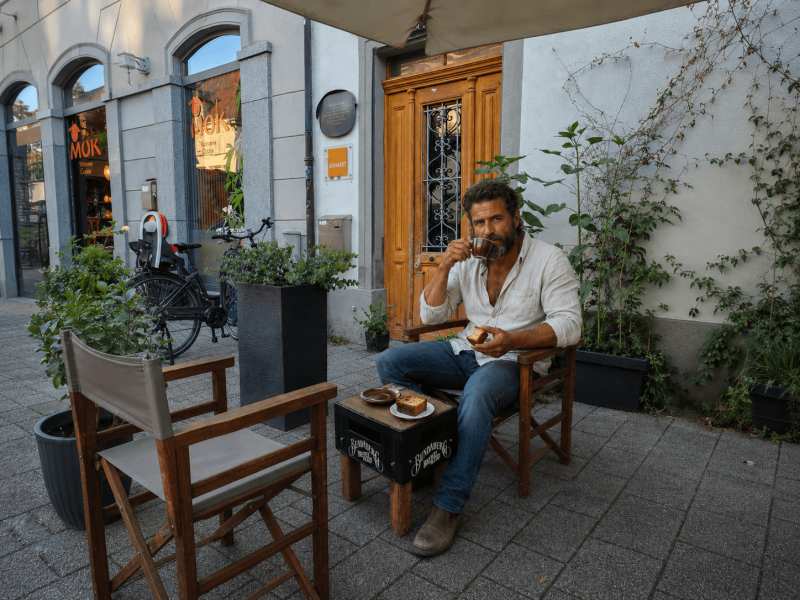
After breakfast, I walked to Kava z Molokom, because all proper fieldwork in Lviv begins with coffee and the comforting possibility of cheesecake. The city was awake but still soft around the edges. Delivery couriers were doing their early-morning ballet. Trams moved with the expression of old professors who had seen everything and approved of very little. Somewhere near the corner, a pigeon was examining a cigarette butt as if it contained state secrets.
Kava z Molokom smelled of espresso, warm milk, and the quiet conspiracy of people pretending they were only having one coffee. I took a table, ordered a large coffee, opened the mission packet, and immediately regretted looking productive.
There were two tasks.
Not one.
Two.
The first was an exploratory visit to a human-dominant dimension where the main intelligent species was human or humanish, but did not communicate through speech.
They communicated through techno music.
I read this sentence three times.
Then I checked whether this was one of those missions where the Institute uses “music” metaphorically, the way scientists say “the song of the stars” and then ruin everything by meaning mathematics.
No. The note was literal.
Primary civic communication: electronic beat structures.Everyday exchange: rhythm, bass, tempo, sampling.Emotional nuance: filter sweeps, distortion, build-up duration, crowd-response modulation.Known translation aid: bring music.
At the bottom, someone had written in a different hand:
Marco owns too much Steve Aoki. Send him.
This is unfair, but not inaccurate.
The Laminas sequence for the first jump appeared on the screen after the usual dramatic pause. Five object icons glowed into place: a porcelain giraffe, a green hotel slipper, a jar of mustard, a bent horseshoe that looked suspiciously like headphones, and a tiny brass spoon with a face on it.
None of these had anything to do with techno music.
The Laminas device has strong opinions about symbolism and none of them are helpful.
I touched the icons in order, finished my coffee in one ambitious swallow, and left our Lviv.
The first thing I noticed on arrival was not the music.
It was the silence.
There were people everywhere. Human-looking, mostly. Some were taller, some had translucent skin at the wrists and neck, some had hair that shimmered faintly like optical fiber, but they were recognizably people. They walked, carried bags, waited for transport, checked devices, leaned on railings, argued, flirted, got annoyed at street crossings. A normal city.
But no voices.
No shouting.
No cars honking.
No one saying “sorry” when they stepped around someone.
The entire city moved inside an enormous, layered electronic pulse.
Not loud like a nightclub. Not chaotic. More like the air itself had a rhythm. Every building seemed to contribute a soft component: a low civic bass from the transit towers, crisp hi-hats from pedestrian signals, little bursts of melodic notification from shopfronts, warm pads rising from public squares. The whole city was a song, and everyone inside it understood where they were supposed to be in the mix.
A woman in a silver coat bumped lightly into a man carrying a stack of boxes. Instead of speaking, she tapped two fingers against her wristband. A soft three-note synth phrase bloomed between them. The man replied with a quick snare roll and a descending bass wobble.
Apology accepted, apparently.
At a crossing, a child asked a parent something by bouncing on their heels in a syncopated pattern. The parent answered through a tiny chest speaker, producing a gentle rising loop that I somehow understood as “after lunch.”
I have been in worlds where stones vote, where rain files complaints, and where a table considered my mug too loud. Still, nothing prepared me for a society where a teenage eye-roll was expressed as a perfectly mixed four-bar drop.
It was beautiful.
It was also terrifying, because I had to communicate.
The mission task was to document whether their communication system could be interpreted by a non-native mind using pattern exposure, imported music, and the Laminas adaptive cultural relay. In plain words: play them music and see whether they think I am saying hello or declaring war.
I found a public square filled with slender white towers connected by moving ribbons of light. People stood in loose circles, exchanging phrases through personal speakers, wrist devices, shoes, earrings, bags, and in one case a very serious-looking hat. No one looked surprised by me, which was either good diplomacy or proof that I had arrived in the tourist district.
I switched on the Laminas device.
It ticked.
Then it made the wet chewing sound.
Then it displayed: LOCAL LANGUAGE DETECTED: ELECTRONIC CIVIC POLYPHONY. WOULD YOU LIKE TO ENABLE CLUB MODE?
I pressed yes.
The router pulsed blue.
I took out my phone, found the Steve Aoki collection, and selected a track that felt friendly, energetic, and unlikely to annex a municipality. The opening beat emerged through the little travel speaker I keep for emergencies, picnics, and moments when a world refuses vowels.
A dozen heads turned.
A street vendor froze mid-pour while serving a glowing blue drink.
An elderly man with a transparent cane listened very carefully, then tapped his cane twice on the ground. The square responded with a soft bass pulse. Then someone added a clap. Then a woman near the fountain answered with a synth chord so warm it made my shoulders relax.
The router translated slowly:
Foreign visitor. Excited. Harmless. Possibly hungry.
I have never felt so accurately understood by a machine.
I tried a greeting. Not in words. Words would have been rude there, like bringing a trumpet to a library. I played a short loop, then added a modest bass rise and a little hand wave.
The crowd listened.
A young man in a jacket that displayed equalizer bars across the sleeves answered with something bright and fast. The router translated:
Welcome, breakfast-heavy traveler.
I looked down at the device.
“How does it know?”
The router did not answer.
The city itself was extraordinary once I stopped worrying about accidentally insulting a tram. The streets were wide and smooth, paved with some black material that shimmered underfoot. Instead of signs, intersections had rhythm posts, each broadcasting a distinct pattern. Shops used melodies instead of names. A bakery played something soft and buttery. A clinic used clean, calming pulses. A government building produced a deeply boring loop in eleven layers, proving that bureaucracy is universal.
Their architecture seemed built for sound as much as space. Balconies curved like speaker cones. Public benches had vibration plates so older citizens could feel low frequencies through their bones. Parks were planted with reed-like trees that trembled in time with the district channel, creating natural percussion when the wind moved through them.
No one spoke.
Everyone communicated constantly.
It made our cities feel lonely by comparison. We shout, type, gesture, misunderstand, repeat, apologize, and still often fail to say what we mean. They simply layered themselves into the city’s shared rhythm, each person adding a small line to a massive living composition.
Then I found lunch.
This was not part of the official mission, but fieldwork without lunch becomes theology, and I try to avoid theology before three in the afternoon.
The restaurant communicated its menu through smell, light, and bass. A host greeted me with a low, smooth sequence that the router translated as:
One seat. Traveler stomach compatible. No shellfish unless brave.
I accepted one seat.
The menu arrived as a small glass plate that vibrated different choices through my fingertips. I selected something that felt like “warm,” “safe,” and “not legally married,” because yesterday’s purple cube had left me cautious.
Lunch came in three parts.
First, a bowl of clear golden broth with floating green pearls that burst against the tongue with the flavor of roasted herbs, lemon, and something close to chicken but more confident. Then a slab of crisp, black-grained bread, hot from the stone, spread with a pale smoky butter that melted into the cracks and smelled like mushrooms after rain. Finally, a grilled fish fillet, or possibly a fish-adjacent animal with excellent career prospects, served over crushed roots, pickled crimson stems, and a sauce that tasted of browned butter, citrus, and the exact feeling of sitting down after a very long walk.
Every bite had rhythm.
Not metaphorically. The food was tuned. The sauce hummed faintly at a lower frequency than the fish. The bread crackled in a staccato pattern. The broth pearls popped in little melodic intervals. I ate slowly, partly because it was delicious and partly because I feared eating too fast might change the meaning of the meal.
At the end, the server played a soft question through the table.
The router translated:
Was nourishment emotionally sufficient?
I replied by playing a short Steve Aoki drop and placing my hand over my heart.
The server listened, nodded solemnly, and brought dessert.
Diplomacy is complicated, but sometimes it works.
Dessert was a cold white square with a warm amber center, served on a black plate that vibrated like a cat purring. It tasted like vanilla, burnt sugar, and applause.
I filed the mission report as successful.
Language recorded. Civic rhythm mapped. Lunch compatibility confirmed. Steve Aoki elevated from personal collection to diplomatic tool.
I returned to our Lviv just before lunch by touching the return sequence: coffee cup, tram wire, cobblestone, apartment key, rain cloud.
The Laminas clicked.
The bass city folded away.
And suddenly I was standing near the familiar old stones of Lviv with the strange emotional aftertaste of having been welcomed by an entire civilization’s subwoofer.
Naturally, I went to Puzata Hata.
There are days when the multiverse gives you tuned fish and vibrating dessert. There are also days when the body says: borscht, cutlet, varenyky, now.
Puzata Hata is one of those places that understands the ancient human truth that a tray is not just a tray. It is a promise. You slide it along, and the world presents possibilities. Soup. Meat. Potatoes. Varenyky. Salad. Dessert. A drink that looks like it remembers your grandmother better than you do.
The place had its usual cafeteria energy: families negotiating with children, office workers eating with disciplined speed, tourists trying to identify dishes by courage alone, and locals who seemed able to assemble a perfect lunch in fifteen seconds without ever slowing the line.
I took borscht with meat, deep red and glossy, with sour cream melting into it like a small white weather system. It was rich, earthy, slightly sweet, and warm in the way only proper borscht can be warm, not just temperature but reassurance. Then chicken Kyiv, golden and crisp, the kind of cutlet that makes you mentally prepare for the butter inside before cutting it open. I added varenyky with potatoes because I am not made of stone, and a beet salad because at some point adulthood must be performed for witnesses.
There was also a drink. Dark berry mors, cold, tart, and sweet enough to remind the tongue it had survived the morning.
I ate with the quiet seriousness of a man re-entering his home dimension through lunch.
For dessert I considered syrnyky, but breakfast had already been excessive and I still had an afternoon mission. This moment of restraint lasted eight seconds. I got the syrnyky.
They were soft, golden, gently sweet, and came with that comforting dairy richness that makes you believe the world can be repaired, one fried cottage cheese pancake at a time.
The second mission was marked as “short observational visit.”
These words are always suspicious.
The Laminas provided the afternoon sequence while I was still finishing the last bit of sour cream: a blue matchbox, a wooden button, a glass carrot, a postage stamp showing a goat, and a red umbrella with one rib missing.
Again, unrelated.
Again, the device seemed proud of itself.
This destination was not bizarre in physics, biology, or cuisine. No talking mountains. No time loops. No legal grass. Just a history-branch Earth.
The divergence point was simple: in this world, the Habsburg monarchy did not collapse after the Great War. It federalized under pressure into the Danubian Commonwealth, a constitutional federation of crowns, republics, languages, parliaments, and committees that had somehow survived into 2026 by turning compromise into a competitive sport.
I arrived in their version of Lviv.
It was still Lviv.
That was the strangest part.
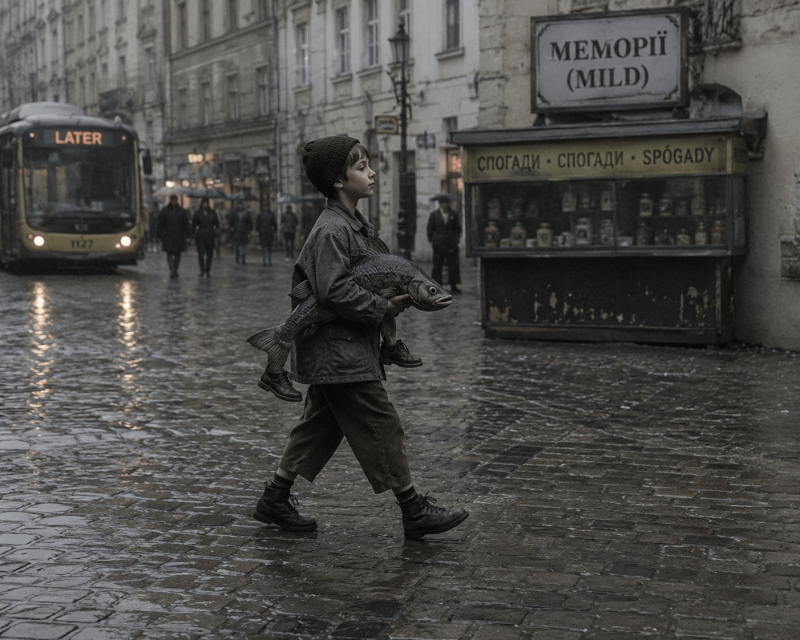
The angle of the light was right. The old town still held itself like a city that knew it was beautiful and did not need to shout. The stones still looked tired in an elegant way. The trams still moved with that metal patience only trams possess.
But the flags were different.
Street signs appeared in Ukrainian, Polish, and German, with a small Commonwealth crest beside municipal notices. A kiosk sold newspapers discussing a transport-budget argument between Galicia, Bohemia, Croatia, and Lower Austria. The opera house had a slightly different inscription. A statue I expected to see was replaced by a statesman with spectacular facial hair and the expression of someone who had spent forty years chairing committees.
My task was simple: confirm divergence, collect civic evidence, and avoid interfering.
I bought a tram ticket from a machine that politely offered six languages, took a photo of a public notice about “Federal Railway Harmonization Week,” and visited a small museum display about the 1919 Compromise of Lemberg. In our world, empires broke, borders moved, languages were forced, and the century became a machine for turning maps into wounds. In this world, they had not escaped conflict, not really, but they had built a slow, irritating, paperwork-heavy bridge over some of it.
No miracles.
Just a different decision, taken at the right time, by exhausted people who apparently chose bureaucracy over catastrophe.
I stood for a while in their Rynok Square, watching students eat pastries under a Commonwealth flag and argue about music. They used words. Normal words. After the morning, this felt almost primitive.
Then the Laminas buzzed.
Short visit complete.
I returned to our Lviv at 18:00 with a tram ticket in my pocket from a country that does not exist here, a diplomatic appreciation for bass, and the growing suspicion that history is mostly a series of doors people notice too late.
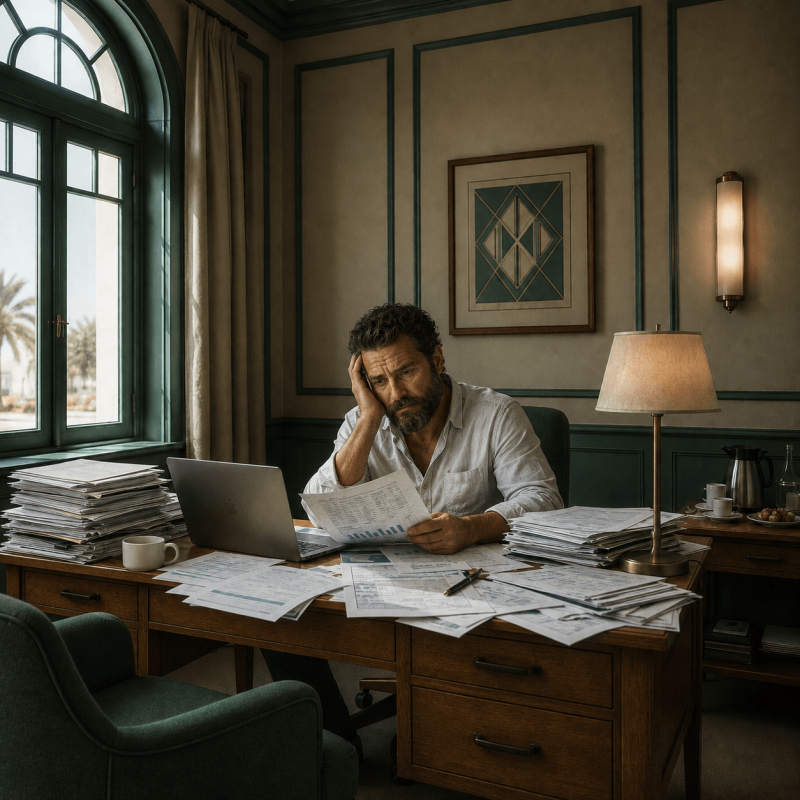
Back at Kava z Molokom, I ordered another coffee and wrote the reports.
The first report contained audio patterns, translation notes, and a formal recommendation that all future Institute missions to the techno-speaking world include someone with festival experience and a willingness to look ridiculous in public.
The second report was calmer: historical divergence confirmed, no unusual physics, no hostile activity, strong café continuity, excellent tram signage.
I also added a private note:
Worlds do not need monsters to be strange. Sometimes all it takes is one historical meeting that ended differently.
After submitting everything, I walked around the old town to calm down.
Lviv in the evening is very good for this. The city folds the day into gold. Rynok Square gathers people the way a table gathers crumbs. Tourists drift. Locals cross with purpose. Musicians appear as if summoned by cobblestones. The buildings watch with painted faces, and every courtyard seems to promise either a café, a ghost, or someone’s grandmother shouting from a window.
I walked without a route. This is the best way to walk in Lviv and the worst way to explain where you have been.
At some point, hunger returned.
This was unreasonable.
I had eaten breakfast like a minor aristocrat, lunch like a returning soldier, and dessert like a man with no future. But interdimensional travel has metabolic consequences, and also McDonald’s exists.
So I went to McDonald’s for dinner.
First dinner.
It is important to label these things honestly.
I ordered a Big Mac menu, because after a day of communicating through bass frequencies and visiting a surviving Danubian federation, there is something deeply stabilizing about two beef patties, sauce, lettuce, cheese, pickles, onions, and a sesame bun assembled by a civilization that has standardized temptation. The fries were hot, salted, thin, and dangerous. The first fry always lies. It says: one is enough to understand the experience. The second fry says: perhaps five. By the time the box is half-empty, you are no longer negotiating with potatoes. You are participating in destiny.
I added an apple pie because the menu looked at me with pastry eyes.
The pie was hot enough to remind me that pleasure and injury often share a border. I bit carefully, failed to wait long enough, and spent ten seconds making the universal human face for “this is delicious but I have made a thermal error.”
No field report will mention this.
After McDonald’s, I could have stopped.
A wise person would have stopped.
Unfortunately, I am not a wise person. I am a man who had walked past Mons Pius and remembered steak.
Mons Pius has the kind of atmosphere that makes meat feel historical. The old Armenian-quarter mood, the stone, the warm light, the sense that the walls have witnessed centuries of serious conversations, business deals, and people saying they will “just have something small” before ordering half the menu.
I ordered a dry-aged ribeye on the bone.
This was not dinner.
This was second dinner, which is legally distinct.
The steak arrived with the gravity of a formal document. A dark crust, properly seared, smelling of smoke, salt, fat, and the deep mineral sweetness of good beef. When I cut into it, the knife moved through the meat with just enough resistance to make the moment ceremonial. The inside was tender, warm, and rosy, the flavor concentrated from dry aging into something nutty, savory, and almost buttery without needing to be soft.
I added coleslaw on the side, because the menu allowed it and because cabbage has spent centuries proving it belongs beside meat. Cool, crunchy, creamy, sharp enough to cut through the richness. I also ordered a little miso butter, which melted over the steak in a glossy line and made the whole thing taste like the cow had studied abroad.
For a few minutes, there was no multiverse.
No Laminas.
No reports.
No techno diplomacy.
Just steak, cabbage, butter, and the deep human silence of eating something very good.
By the time I left, it was close to 21:00.
The reasonable ending would have been bed.
The Lviv ending was Цукерня.
I stopped at Кондитерська Цукерня because the evening had become soft and I had walked enough to create a legal argument for cake. The place had that old confectionery feeling: glass cases, warm light, polished surfaces, cakes sitting with the quiet confidence of aristocrats, and the scent of coffee and sugar trying to persuade every passerby that tomorrow’s problems could wait.
I ordered Spartak.
A slice of Spartak before bed is not a dessert. It is a layered architectural decision. Thin chocolate cake layers, soft cream between them, cocoa bitterness, sweetness, and that gentle old-fashioned density that makes you slow down whether you planned to or not. Each forkful tasted like someone had taken the idea of comfort, stacked it carefully, and dusted it with memory.
I ate it slowly.
Outside, Lviv settled into night. The square lights glowed. The old stones cooled. Somewhere, someone laughed too loudly and then apologized. A tram passed with its usual elderly dignity.
I thought about the techno-speaking city, where apology is a three-note synth phrase.
I thought about the other Lviv, where a federal empire survived by becoming a committee so large history could not easily kill it.
I thought about breakfast eggs, Puzata Hata borscht, McDonald’s fries, Mons Pius ribeye, and Spartak cake.
Then I wrote the last line of the day’s personal note:
Some worlds communicate through bass. Some through flags. Lviv communicates through feeding you until you forgive reality.
Publishing now.
Tomorrow, I will eat sensibly.
This is almost certainly false.