The BlueSky Problem, the Empire Problem, and Why I Am No Longer Allowed Near Rösti
I have discovered a serious flaw in my current life.
I cannot live-post anomalies.
This is unfair.
Normal travelers can post things like: “Lovely coffee in Salzburg!” or “Cheese lunch in Appenzell!” or “Accidentally drove into a pedestrian zone because the Swiss town center looked like a toy village and my navigation app had apparently joined a cult!”
I, however, must write everything later, after Clovis has checked that no post contains active coordinates, forbidden symbols, unstable guild marks, sleeping gods, awake accountants, or “language likely to encourage tourists to investigate sealed cross-world infrastructure.”
This is why I am considering opening a BlueSky account.
Not because it would solve the problem. It would absolutely not solve the problem. Clovis would still call me within eleven seconds and say, “Marco, please delete the post where you describe the imperial road-seal beneath the bakery sign.”
But at least I would have eleven seconds of artistic freedom.
Anyway.
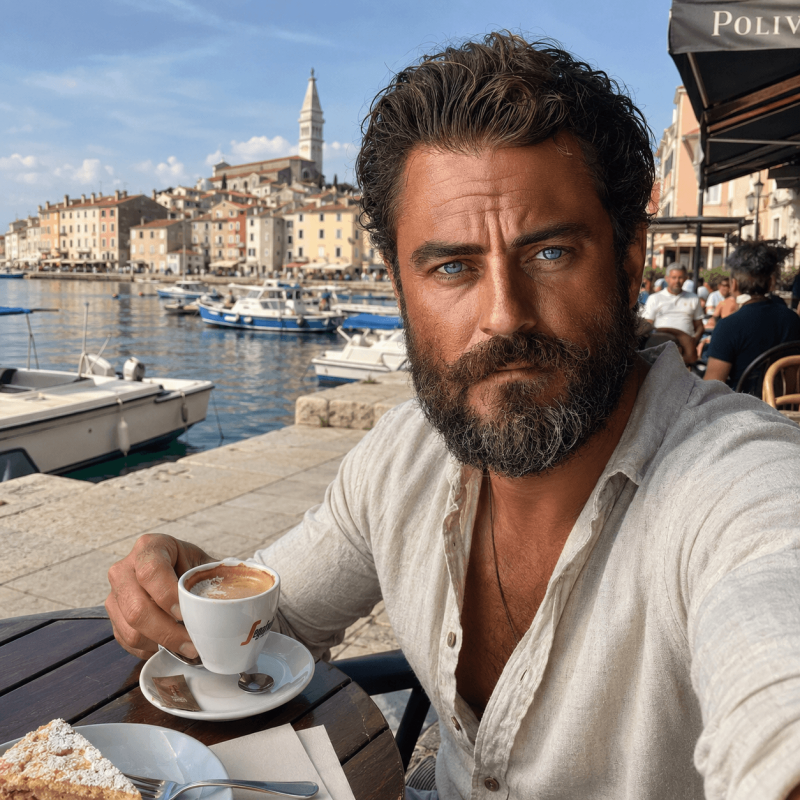
You may remember Sunday in Salzburg.
Heatwave. Coffee. Apple tart. Tim Tams. A suspicious blackboard near Ratio Coffee with the phrase Coffee from another world, which I first treated as branding and then, because my life is made of punishment, recognized as something far worse.
A guild mark.
The Three-Weight Wheel of the Guild of Measured Roads, one of the oldest and least morally flexible trade organizations of the Meridian Empire of Aurel-Suntria.
I then drove to Appenzell, because Clovis sent the sort of message one sends when they do not want the recipient to enjoy their day:
Drive to Appenzell. Check in. Wait for Sora and Dan. Do not engage the mark alone.
A good rule, generally.
A rule I obeyed.
Mostly.
I checked in, waited, became bored, and went to lunch, because if civilization is collapsing through a Swiss Alpine town, one should at least collapse with local cheese.
Appenzell was wonderful.
I mean this sincerely. Wonderful. Painted houses, flowers, carved signs, clean streets, mountains waiting in the background like polite giants, and that quiet local confidence found only in places where people know exactly what their cheese is worth.
For a few minutes, I seriously considered recommending that Clovis open a permanent outpost there.
Not a big one. Nothing vulgar. A small office above a bakery, perhaps. Two analysts, one field locker, one emergency portal dampener, and a mandatory daily cheese allowance.
The Institute would improve immediately.
Then I accidentally drove around the pedestrian center.
In my defense, Appenzell’s center does not look like a forbidden vehicle zone. It looks like a charming painted postcard into which someone has hidden legal consequences. The street narrowed, people looked at me, a woman with a shopping bag gave me the calm moral judgment usually reserved for war criminals, and I realized I had become the anomaly.
I performed the traditional foreign-driver ritual: tiny panic, apologetic hand gesture, slow escape, prayer to all gods of insurance.
Dan later said, “You know pedestrian signs exist, right?”
I told him, “Yes, but in Switzerland they are written in Swiss confidence.”
Sora did not laugh.
Sora never laughs when it would help me.
She only gives me that look — the one that says she has already understood the entire pattern and is waiting for the men in the room to stop emotionally circling it.
You know Sora.
Sora is beautiful in a way that makes the word beautiful feel lazy. She is not decorative. She is precise. She enters a place and the light seems to file a report. Dark hair, usually controlled by one copper clip. Eyes that can examine a wall, a man, or an empire and find the hidden hinge. Calm voice. Dangerous patience.
Sora is beautiful in a way that makes the word beautiful sound underfunded.
She is not decorative. She is engineered calm. Pale hair falling like controlled sunlight, blue eyes too clear to be innocent, the kind of face that makes mirrors behave professionally. She enters a room and every light source seems to adjust itself, not to flatter her, but to avoid making a mistake.
Her voice is soft, almost polite. That is usually when people become worried.
Sora does not look dangerous in the usual way. No dramatic posture, no need to threaten, no visible hunger for control. She simply observes: a door, a weapon, a nervous official, an empire pretending it is eternal. Then she finds the weak point with the patience of weather.
Around her, probability becomes loyal.
Guns jam. Safeties stick. A sniper sneezes at the wrong second. A blade slips from a hand that has never slipped before. The floor is suddenly wet. The elevator arrives just in time. The guard who should have turned left turns right because he remembers soup. Nobody can prove she did anything. That is the worst part.
Sora is not invincible, technically.
Technically, a castle wall is just stones.
But people who try to kill her tend to discover that the universe has filed their request incorrectly.
Dan is also Clovis, but from the opposite school of existence.
Dan looks like a man designed by a committee to be forgotten at border control. Practical jacket. Normal shoes. Normal haircut. Normal face. The sort of man you would not notice in a café until you realized he had already found the back exit, the fuse box, the staff schedule, and the one waiter who used to work in customs.
Dan is field logistics.
Which means when Sora says, “This pattern is an imperial transit claim,” Dan says, “Good, I rented a van under a name that does not exist.”
Together, they are useful.
Individually, they are worrying.
Together with me in one tiny Swiss town, they meant only one thing:
Something was deeply wrong.
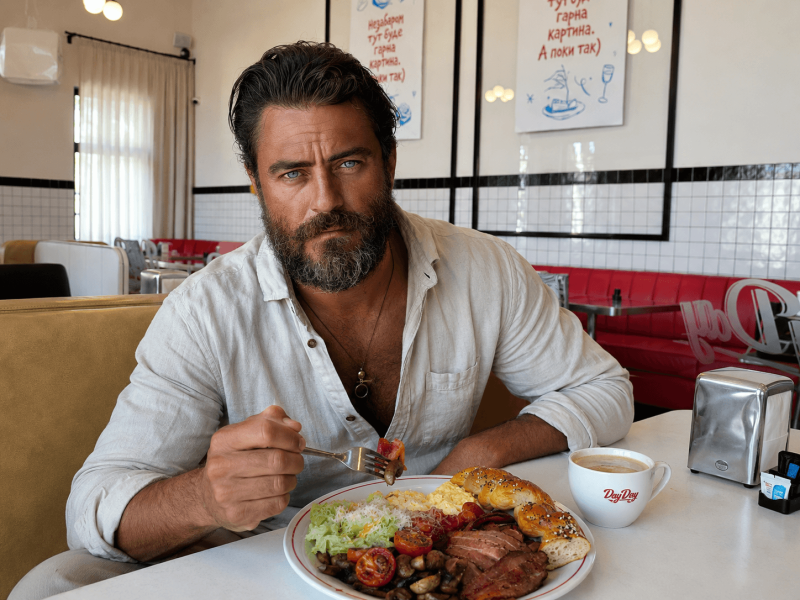
And because this is a travel blog, apparently, I should also confess that before we solved anything, I ate like a man trying to personally preserve Alpine culture.
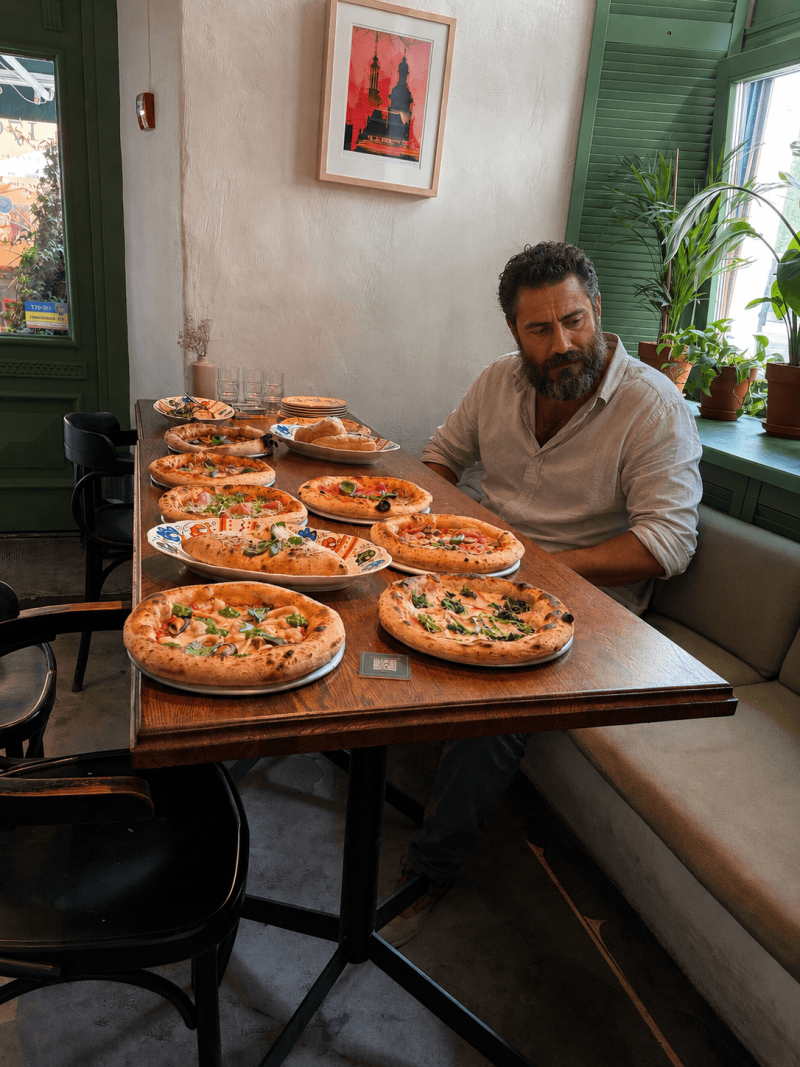
Appenzeller cheese samples: Classic, Surchoix, Extra, Räss. The Räss was not a cheese so much as a legal intervention. There was smoked ham, Mostbröckli, Salsiz, Spätzli tossed in butter, and Rösti with a crust so golden it should have had diplomatic immunity.
Also beer.
A local Appenzeller beer, cold and clean and civilized, which almost convinced me that the universe could be repaired by fermentation.
It cannot.
But it can be temporarily softened.
Now, since Clovis has finally approved the release of selected excerpts, here are the most unboring parts of my report.
You are welcome.
Excerpt from Field Report M-77-A: Salzburg / Appenzell / Konstanz / Vaduz
Subject: Unauthorized presence of Aurel-Suntrian guild transit marks on Earth BYP87PE.
Filed by: Marco
Reviewed by: Sora
Logistics addendum: Dan
Mood: Hot, suspicious, overfed.
The first confirmed mark appeared in Salzburg, outside Ratio Coffee, disguised as chalk decoration on a café board. The sign contained the phrase “coffee from another world,” a rocket drawing, and beneath it a distorted Three-Weight Wheel.
Initial assessment: accidental copy, local artist, or marketing stupidity.
Corrected assessment: no, obviously not, because joy is illegal.
The mark was incomplete but directionally active. Not a full gate. Not a portal. A route whisper.
Route whispers were used in the Meridian Empire before the formal Road Charters. They do not open a road. They invite one to remember where it used to be.
This is already bad.
Roads should not remember things.
Especially not on our Earth.
The Meridian Empire of Aurel-Suntria is not the kind of empire that arrives with armies first.
That would be too honest.
It arrives with surveyors.
Then clerks.
Then toll ledgers.
Then legal frameworks.
Then soldiers, if the local population becomes unhelpfully alive.
On its own Earth, Aurel-Suntria grew from coastal kingdoms into an imperial system of roads, tax zones, grain monopolies, temple courts, and trade guilds. In official murals, everyone is clean and grateful. In reality, the Empire is run by noble houses who hate each other, priests who pretend not to own warehouses, generals who believe roads are a form of obedience, and guilds who learned centuries ago that whoever controls passage controls politics.
The Guild of Measured Roads is one of the worst.
Not worst as in bloodiest. There are bloodier.
Worst as in patient.
They do not burn your city. They measure it.
They weigh your grain, certify your bridge, license your carts, standardize your milestones, register your wells, and then one day you realize every road leading out of your town belongs to them and leaving requires a stamped permission tablet issued by a man named Auditor Pel Sarvian who has never smiled in his life.
Multiverse travel to Earth BYP87PE is forbidden.
Everyone knows this.
The Empire knows this too.
The problem is not that they are ignorant.
The problem is that they may have found a legal argument.
Empires love legal arguments. It allows conquest to wear reading glasses.
After Appenzell, the signs continued.
Because of course they did.
One sign is an incident.
Two signs are a pattern.
Three signs are a meeting.
Four signs are usually where someone starts using words like “containment.”
In Appenzell, Sora found the second mark under the painted sign of a little shop selling local goods. It was not obvious. A curl in the painted border. Three tiny dots around a wheel shape. A triangle hidden in floral decoration.
I would have missed it.
Sora did not.
Sora misses nothing except opportunities to reassure me.
Inside the shop, for perhaps two seconds, I saw Fred.
Yes. Fred.
The Emporium mascot.
At least I think it was Fred.
A small shape in the corner display. Rounder than it should have been. Familiar in that deeply inconvenient way. Like a toy pretending badly not to be alive. I turned, blinked, and it was gone, replaced by a perfectly ordinary shelf of local souvenirs.
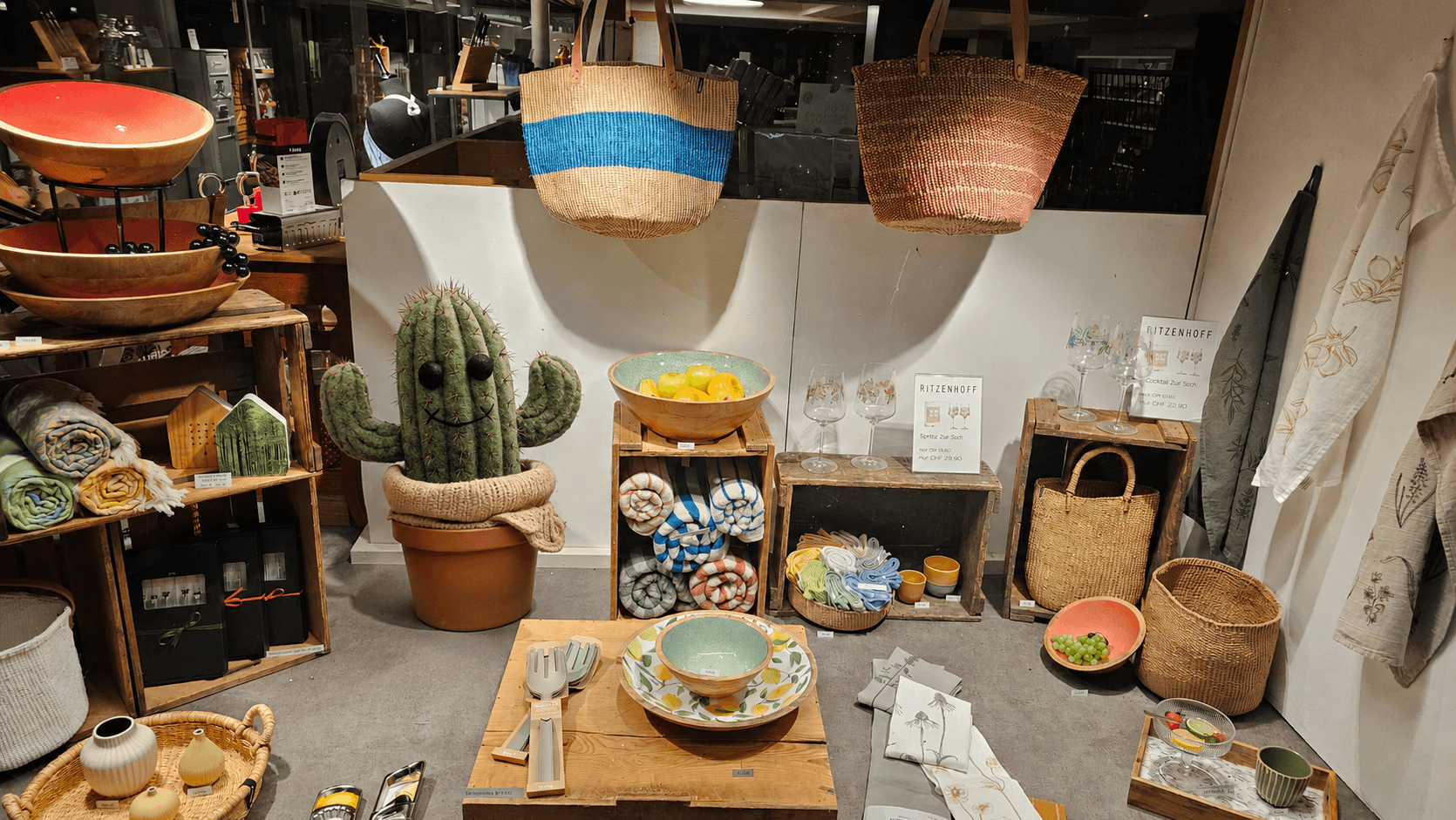
I asked the shopkeeper whether there had been a mascot figure there.
She said, “Maybe a cow?”
It was not a cow.
Unless Fred has recently rebranded into livestock.
Which, knowing the Emporium, is possible.
I made a note.
Sora read the note and said, “Do not get distracted by Fred.”
This is very easy advice to give when one is not being haunted by brand identity.
Then Konstanz.
Lake air. German streets. Swiss proximity. That old borderland feeling where maps behave politely but history does not.
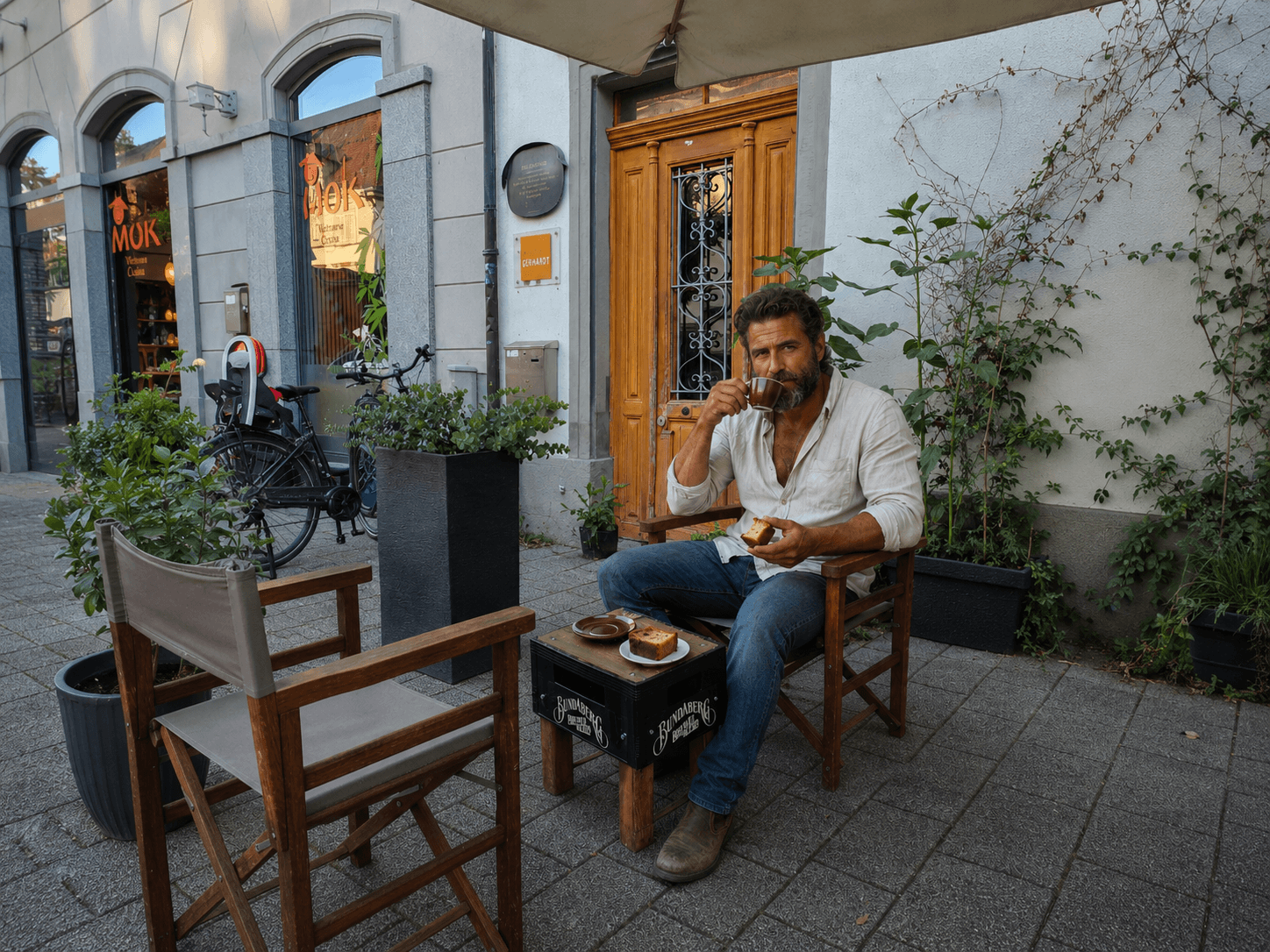
Konstanz gave us fish.
Of course it did.
I had lake fish with potatoes, then pretzels, then something sweet because walking near water makes me believe calories evaporate. Dan found a bakery and returned with pastries “for surveillance,” which is how I know he is a professional.
The mark in Konstanz was on an old metal utility cover near a side street leading toward the lake. Not painted. Scratched. Recent. Too recent.
This one used the Bridge Variant of the Three-Weight Wheel.
Sora became very quiet.
Dan stopped chewing.
I asked, “Is this bad?”
Sora said, “It means they are not marking locations. They are marking transitions.”
This is what I dislike about field analysts. They use sentences that create more problems than they solve.
The Bridge Variant is used when the Guild identifies a crossing that can be converted into a measured road. On their Earth, this meant river bridges, mountain passes, canal locks, caravan gates.
On our Earth, it could mean borders.
Or lakes.
Or the thin places between worlds.
I said, “So Konstanz is a bridge?”
Sora said, “No. Konstanz is part of a sentence.”
I hate when geography becomes grammar.
By Vaduz, I had begun to suspect the route was not accidental.
Vaduz looked clean, expensive, and slightly unreal in the way small capitals can look when they are very aware of being small capitals. The mountains watched us. The streets behaved. Even the shadows seemed financially stable.
Naturally, I ate again.
Liechtenstein does not get enough credit for being dangerous to hungry travelers. Käsknöpfle with fried onions. Local ham. Dark bread. A small sausage that looked innocent and was not. A glass of local beer. Then cake, because Dan said, “We may be here a while,” and I interpreted that as medical permission.
The Vaduz mark was the fourth.
Not chalk.
Not scratched.
Stamped.
On a discreet metal tag attached to the underside of a public sign near a pedestrian route.
Dan found it because Dan looks under things. This is his great gift. Some people have visions. Dan checks screws.
The tag carried a full imperial transit formula:
Road. Measure. Passage. Debt. Witness. Seal.
I translated the first half.
Sora translated the second.
Then we both looked at each other.
Dan said, “For those of us who did not attend haunted business school?”
Sora said, “It is a claim.”
I said, “A claim on what?”
She said, “The route.”
Dan said, “The road?”
Sora said, “No. The legal possibility of the road.”
This is why I drink.
Here is the problem, in plain language.
The Meridian Empire is not trying to invade us with soldiers.
Not yet.
They are trying to establish a recognized commercial passage across our Earth by marking a sequence of cities as transit nodes: Salzburg, Appenzell, Konstanz, Vaduz.
Maybe more.
Aurel-Suntrian law has a concept called prior measured passage. If a guild can demonstrate that a road exists, has been measured, has been witnessed, and has carried recognized value, then the road becomes protected under imperial charter.
On their Earth, this was a way to stop local lords from blocking trade.
Useful.
Then abused.
Then weaponized.
Now imagine applying that concept between worlds.
They do not need to conquer Earth immediately.
They only need to prove that part of Earth is already functioning as a valid imperial transit corridor.
Once that claim stabilizes, the road begins to protect itself.
Maps change slightly.
Local directions become unreliable.
People remember shops that were never there.
Old signs gain new symbols.
Certain doors begin to open onto weigh-houses.
Cargo appears with paperwork.
Paperwork is the most dangerous stage of any invasion.
An army can be fought.
A tariff dispute can last forever.
And if enough guild-recognized transit happens, the Meridian Empire can say: We did not violate the multiverse ban. We merely used an existing road.
This is nonsense.
Unfortunately, magical law is often nonsense with teeth.
How did we prepare?
Badly, but with confidence.
Sora reconstructed the route sentence.
Salzburg: invitation.
Appenzell: measure.
Konstanz: crossing.
Vaduz: seal.
There should have been a fifth site.
A completion point.
A place where road, measure, crossing, and seal could become an active corridor.
The obvious choice would have been somewhere imperial in style. Vienna, Milan, maybe an old trade city.
Instead, Sora said, “Venice.”
Dan said, “Of course.”
I said, “Why of course?”
Dan said, “Because whenever something can happen in a damp alley, it happens in Venice.”
This is unfair to Venice.
But not entirely wrong.
Venice is one of those cities where reality already feels like it has been negotiated with water. Streets end in canals. Doors open onto boats. Reflections act like they have opinions. Every bridge looks as if it may require a password after midnight.
Perfect for a small interdimensional completion point.
Also terrible for parking.
Before Venice, however, we needed to break the imperial claim.
Sora’s plan was elegant.
Dan’s plan involved equipment.
My plan involved lying to a dead bureaucracy in its own language.
So, the usual division of labor.
Sora prepared a counter-reading of the marks, proving that the route sequence was not valid because the Appenzell measure had been contaminated by unregistered witness displacement.
That sounds invented.
It was not.
It means I drove through the pedestrian zone by mistake and therefore became an unauthorized moving witness inside the measured node before the Guild completed its internal closure.
Yes.
My bad driving saved Europe.
Possibly.
Dan was extremely upset by this.
He said, “You are telling me your illegal turn broke the imperial road claim?”
Sora said, “Technically, it introduced procedural ambiguity.”
I said, “I prefer ‘heroic navigation.’”
Dan said, “You nearly hit a flower box.”
I said, “The flower box knew what it was doing.”
The Guild of Measured Roads loves procedure. If you contaminate their sequence with an unregistered witness who has crossed worlds before, eaten local cheese, misread municipal signage, and failed to obtain pedestrian-zone authorization, their own system cannot decide whether the witness is cargo, surveyor, criminal, or weather.
This delayed stabilization.
I have never been prouder of being administratively inconvenient.
In Venice, the anomaly was small.
Almost cute.
This was suspicious.
We found it near a tiny bridge behind a quieter canal, where a little souvenir shop sold glass fish, postcards, magnets, and masks that looked like they knew secrets but were too tired to share.
There was a puddle in the stone.
No rain.
No leak.
Just a puddle, perfectly round, reflecting not the sky above Venice but a narrow sunlit road lined with white imperial milestones.
Every few seconds, something tiny crossed the reflection.
A beetle.
A cartwheel.
A paper boat.
Then, very clearly, a little brass toll bell rang from inside the water.
Dan crouched and said, “That is adorable.”
Sora said, “Do not anthropomorphize the breach.”
The puddle produced a receipt.
A small wet paper slip rose to the surface with imperial script on it.
It read:
One passage pending. Weight unknown. Witness disputed. Debt unresolved.
I said, “Good. They are confused.”
Sora handed me a copper stylus and said, “Finish it.”
So I wrote the formal refusal in Old Meridian trade cant.
Not poetic Meridian.
Not court Meridian.
Trade cant.
The ugly practical version used by caravan auditors, weigh-house clerks, toll monks, bridge lawyers, and people who believe ink is a weapon.
The refusal translated roughly as:
No road exists because no road has been properly measured.No measure exists because the witness was unlicensed.No witness exists because the witness was eating cheese.No debt exists because the claimant failed to name the cargo.Return to sender.
Sora objected to the cheese line.
I said it was legally relevant.
Dan said, “It might be the most honest thing in the document.”
The puddle rang its little bell again.
Then the reflection changed.
For one moment, I saw the imperial road clearly: white dust, red banners, survey poles, three men in guild blue arguing beside a wagon, and behind them a larger shadow — not an army, not yet, but a convoy.
Waiting.
Then the puddle folded inward like a closed eye.
The bell sank.
The wet receipt dried into blank paper.
The anomaly was sealed.
Small.
Cute.
Deeply illegal.
Afterward, we had coffee.
Because in Venice, after sealing a forbidden interdimensional toll puddle, one should not immediately leave. That would be rude.
I also had cicchetti. Several. Little pieces of bread with things on top, which is the most dangerous food category because each one feels like a sentence fragment and therefore one keeps eating in search of grammar.
There was baccalà mantecato. Anchovies. Something with artichoke. Something with ham. Something I identified only as “yes.”
Dan counted them.
I told him counting food after fieldwork is against the spirit of recovery.
Sora had one espresso and read the blank receipt under sunlight.
I asked her what she thought.
She said, “The Empire is probing.”
Dan said, “That sounds bad.”
Sora said, “It is.”
I said, “But the road is closed.”
She said, “This road.”
I hate accurate people.
So that is the answer.
What is wrong with the Empire coming to our Earth?
Everything.
Not because every person in Aurel-Suntria is evil. They are not. I have met kind innkeepers, brave smugglers, bored students, honest bridge masons, corrupt priests with excellent taste in soup, and one imperial tax widow who could drink Dan under the table while reciting shipping law.
But empires do not arrive as people.
They arrive as systems.
And systems are much harder to ask politely to leave.
Aurel-Suntria would not begin by burning villages. It would begin by recognizing “historic transit rights.” Then protecting merchants. Then stationing guild observers. Then requesting security for the observers. Then building warehouses. Then insisting the warehouses are exempt from local jurisdiction. Then offering loans. Then measuring roads. Then correcting maps.
By the time anyone noticed the invasion, it would already have an office, three seals, and a complaints procedure.
The multiverse travel ban to BYP87PE exists for this reason. Not because worlds should never touch. They do. They always have. A person can cross. A lost child. A traveler. A refugee. A fool like me.
But states?
Empires?
Guild systems?
No.
A person brings a story.
An empire brings paperwork.
And paperwork multiplies.
For now, the Salzburg-Appenzell-Konstanz-Vaduz-Venice sequence is broken.
The road claim failed.
The Guild of Measured Roads has, I hope, received a very embarrassing procedural rejection.
Somewhere in Aurel-Suntria, an auditor is probably shouting at a junior surveyor.
This warms me.
But Sora thinks there are other marks.
Dan thinks someone on our Earth helped place them.
I think Fred was in that Appenzell shop for a reason.
Clovis thinks many things and shares almost none of them, because Clovis was apparently raised by locked cabinets.
As for me, I am tired.
I am full of cheese, sausages, fish, pastries, beer, coffee, cicchetti, and resentment.
I would like, very much, for the next Institute assignment to send me somewhere calm.
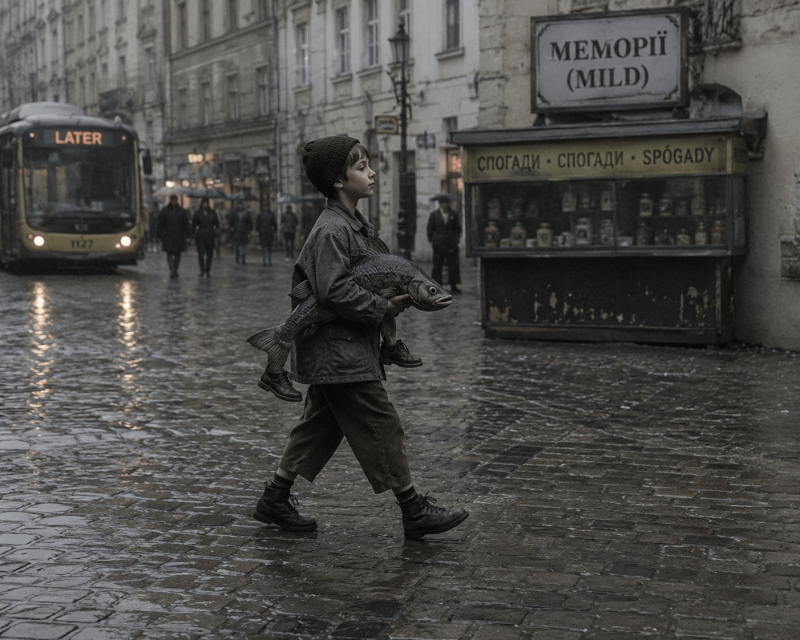
Preferably Lviv.
For a longer period.
A proper stay, not a frantic arrival, not a corridor between missions. I want familiar streets, good coffee, the Ibis lobby, quiet mornings, old stone, supermarkets I understand, and the strange comfort of a city that has no right to feel peaceful and yet sometimes does.
Maybe Clovis will allow it.
Maybe the next anomaly will be in Lviv and involve cinnamon rolls, a polite door, and no empire larger than a bakery.
Yes.
And maybe Rösti is a salad.