The Tourist Between Two Incidents
I woke on Wednesday morning with the unpleasant certainty that Tuesday had really happened.
This was disappointing.
Sometimes, after a dimensional incident, sleep rearranges the previous day into something more reasonable. A dead professor becomes an injured professor. A black book becomes a black notebook. Writing beneath human skin becomes poor lighting and excessive imagination.
This time, Professor Dániel Kőszegi remained dead.
The black book remained in Clovis containment.
And somewhere inside it, according to the final message written through the professor’s body, my volume remained open.
I lay in bed at the Mercure and stared at the ceiling.
The ceiling offered no interpretation.
Hotel ceilings rarely do. This is one of their better qualities.
My phone contained five new messages.
The first came from Clovis Operations.
CONTAINMENT STABLE. OBJECT REMAINS CLOSED. NO FURTHER TEXT MANIFESTATION.
The second came from Clovis Medical.
PRELIMINARY EXAMINATION OF PROFESSOR KŐSZEGI INCONCLUSIVE. NO EXTERNAL TRAUMA CONSISTENT WITH CAUSE OF DEATH. SYMBOLS PRESENT WITHIN MULTIPLE DERMAL LAYERS. FURTHER REPORT TO FOLLOW.
The third came from Professor Áron Váradi.
I have not slept. I have read the consultancy agreement twice. Is the paragraph concerning “temporary historical reassignment” a joke?
I replied:
No. Ask them to explain the pension consequences.
The fourth message came from Clovis Personnel.
Please do not alarm new consultants during onboarding.
I replied:
Then improve the pension consequences.
The fifth message contained only an image.
It showed the black book inside a transparent containment chamber. The object lay on a white platform beneath several instruments. Its leather cover reflected almost no light. The metal corners appeared darker than the space around them.
Someone had placed a measurement scale beside it.
Professor Kőszegi would have appreciated that.
I turned the phone face down.
There are missions which end with a rescued person, a closed passage, a recovered object, and enough damage to produce several weeks of administrative resentment.
There are missions which end with the world saved, although usually the world never learns it required saving.
And there are missions which end with a body being carried out of a university office while you stand in a corridor explaining to the police that the body had not technically been there twenty minutes earlier.
Those are harder to file as successes.
I had arrived in Budapest because Professor Kőszegi believed I would understand what he had found.
He had been correct.
I had understood it one day too late.
Immortality encourages people to assume you have learned how to accept death.
This is not true.
It merely gives you more examples.
At eight thirty, I went downstairs for breakfast.
The breakfast room at the Mercure was already operating at full international capacity.
A German couple were studying the bread selection with the seriousness of engineers inspecting a bridge. A family near the window had constructed a defensive perimeter using chairs, suitcases, and three small children. Two businessmen were speaking quietly over coffee while both checking their phones, demonstrating the modern ability to ignore someone in two ways simultaneously.
The buffet extended along one wall.
Eggs.
Sausages.
Bacon.
Cheese.
Cold meats.
Fruit.
Yoghurt.
Pastries.
Several kinds of bread.
Small tomatoes which appeared to have been included as witnesses.
I took a plate.
After the events at Trófea Grill the previous evening, I intended to demonstrate moderation.
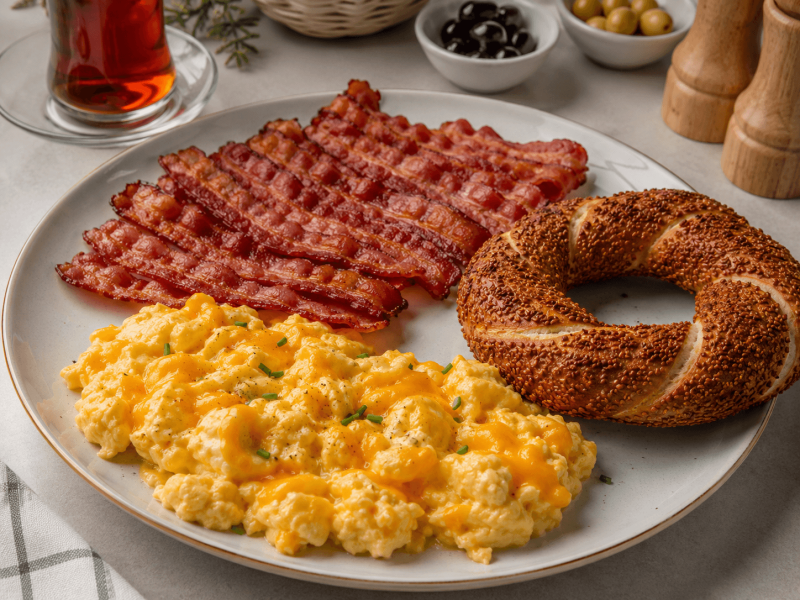
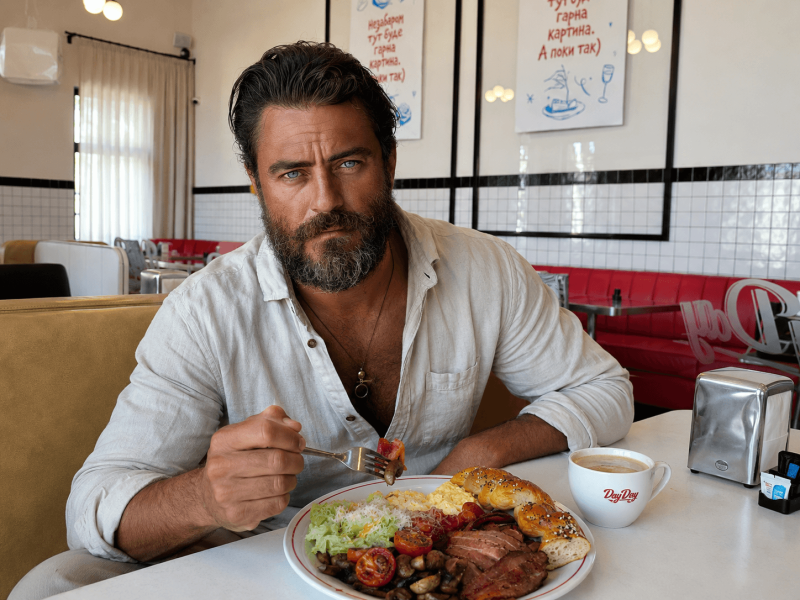
I selected scrambled eggs, two sausages, bacon, mushrooms, cheese, ham, bread, a croissant, and several potatoes.
Then I noticed another tray.
Moderation is often defeated by poor buffet geography.
I added pancakes.
The coffee machine presented several options using small illuminated symbols. Espresso, cappuccino, long coffee, hot water, and one symbol that resembled a cloud being interrogated.
I chose long coffee.
The machine made several internal decisions, sighed mechanically, and produced something respectable.
This was already an improvement over the coffee in my room.
I sat near the window.
Outside, Váci Street was beginning another day of commercial diplomacy. Delivery workers moved boxes into shops. Café tables were being arranged. A man cleaned a window while two tourists stood directly in front of it consulting a map.
Budapest had continued.
Cities do not stop because one person dies.
They do not stop because a book appears from nowhere, because a professor vanishes, or because someone discovers that a fourteenth-century clerk recorded an immortal traveller destroying a royal banquet with sewage.
Cities have deliveries.
They have breakfast shifts.
They have trams to run.
This is either comforting or cruel, depending on the quality of the coffee.
I ate slowly.
The scrambled eggs were good. The sausages were better. The croissant produced enough fragments to establish a secondary breakfast site across the table.
I returned for fruit.
This was partly health and partly camouflage.
A member of staff saw me carrying the bowl and had no reason to suspect I had already eaten enough breakfast for a minor archaeological expedition.
My phone vibrated again.
Áron had replied.
They say temporary historical reassignment means being sent to investigate an artefact in another time period.
Correct.
They say it has happened only fourteen times.
That is probably true for your department.
Three dots appeared.
Disappeared.
Appeared again.
There are departments?
I put the phone away.
Some truths are better introduced after lunch.
When I finished breakfast, I returned to my room and packed.
The Brama went into its reinforced case.
The Laminas went beside it.
My clothes occupied the remaining space around equipment capable of disputing the structure of reality.
This is why I travel with soft shirts.
I checked beneath the bed, inside the wardrobe, behind the curtains, and in the bathroom.
Not because I expected to find anything.
Because experience had taught me that objects from other realities frequently waited until checkout to become visible.
The room appeared normal.
The mirror contained only my reflection.
The wardrobe remained a wardrobe.
The minibar had not developed political awareness.
I left my bag with reception and stepped back onto Váci Street.
My bus to Zagreb would not leave until later in the afternoon.
I had several hours remaining in Budapest.
For the first time since arriving, nobody was missing.
Nobody had asked me to inspect an artefact.
No device was emitting a warning.
Clovis had not assigned me another emergency.
I decided to become a tourist.
I have attempted this before.
Being a tourist requires a particular discipline. You must look at a building without asking whether it exists in other timelines. You must visit a museum without checking the exhibits for extradimensional residue. You must cross a bridge without calculating which section would collapse first during an attack.
Most people achieve this naturally.
I require concentration.
My first stop was Cloud 9 Café.
I had visited it the previous day before the university, when Professor Kőszegi had still been missing rather than confirmed dead. I remembered the tables, the smell of coffee, the low conversation, and the temporary impression that the day might still end normally.
It had not.
The same barista stood behind the counter.
She recognized me.
“You came back.”
“The coffee worked.”
“What did it do?”
“It made me come back.”
She considered this.
“Then it worked very well.”
I ordered a large filter coffee and a pastry containing apricot jam.
“Anything else?”
“A less complicated day.”
She looked toward the menu board.
“We are out of those.”
“I expected that.”
I took a table near the window.
The coffee arrived in a ceramic cup large enough to require two hands. It was hot, dark, and entirely uninterested in medieval manuscripts.
For several minutes, I allowed myself to do nothing.
People passed outside.
A courier stopped to adjust the bag on his bicycle. Two women walked by carrying shopping bags and arguing cheerfully. A small dog refused to continue in the direction selected by its owner and established an independent foreign policy beside a lamppost.
Inside, cups touched saucers.
Milk steamed.
Someone laughed at a nearby table.
Normality is not the absence of strange events.
It is the collection of small things that continue despite them.
I opened my tablet.
The photographs from Professor Kőszegi’s office were stored in an encrypted folder.
I did not open it.
Instead, I searched for ordinary tourist attractions.
The first result suggested Castle Hill.
I rejected it.
Castle Hill currently contained a sealed recess where a manuscript about me had survived for more than six centuries. Somewhere nearby, Professor Kőszegi had begun the chain of events that killed him.
I had seen enough of Castle Hill.
The second suggestion was the Hungarian National Museum.
I had also seen enough academics.
The third was the Danube.
The Danube seemed unlikely to ask me to translate anything.
I finished the pastry, which distributed apricot jam onto one finger, the plate, and an area of the table beyond reasonable pastry range.
Then I walked toward the river.
The Danube appeared between buildings in fragments of silver-blue light.
Budapest arranged itself around the water with theatrical confidence. Buda rose on one side, Pest spread across the other, and bridges connected them with the elegance of structures unaware of how many armies, floods, revolutions, occupations, collapses, reconstructions, and tourists they had survived.
I walked north along the river.
Boats moved beneath the bridges.
Trams passed with a metallic hum.
People stopped for photographs, often positioning themselves so carefully that the city became background evidence of their own existence.
I took photographs too.
This is another tourist requirement.
I photographed the river.
I photographed the castle from a safe distance.
I photographed a tram.
I accidentally photographed the back of a man’s head when he stepped in front of me.
He now exists in my archive as Budapest Landscape 7.
Near the Shoes on the Danube Bank memorial, the city became quieter.
People spoke less.
Metal shoes stood along the stone edge of the river, small and ordinary and impossible to mistake for decoration.
I stopped.
There are places where history is not hidden in manuscripts or sealed inside walls.
It is left where everyone can see it.
No dimensional device is necessary.
No translation is required.
I stood there longer than I intended.
Professor Kőszegi had spent his life recovering people from fragments. A name in a register. A note in a margin. A damaged line of ink. A body mentioned once in an excavation report.
He had found me in a medieval book.
Now someone else would have to reconstruct him from the traces he had left behind.
I continued walking.
At the Parliament building, I joined a group of tourists who were listening to a guide explain the architecture.
I did not understand the language.
This improved the experience.
The guide pointed upward.
Everyone looked upward.
I looked upward too.
He gestured toward the river.
Everyone turned toward the river.
I followed.
For approximately seven minutes, I participated in a tour using only social instinct.
Then the group entered a restricted area and I separated before someone requested a ticket.
I bought a refrigerator magnet from a souvenir shop.
It showed the Parliament building beneath a sky much bluer than any sky Budapest had produced during my visit.
I do not own a refrigerator permanently.
I buy magnets anyway.
They accumulate in a metal case at Clovis.
One day, if I ever stop moving, I will need an extremely large refrigerator.
I took Tram 2 along the river for part of the return journey.
The tram windows framed the city in moving sections. Stone facades. Trees. Water. Bridges. Tourists. Office workers. A cyclist travelling with the confidence of someone who believed traffic laws were personal criticism.
For once, the Laminas remained inside my bag.
I did not scan the passengers.
I did not test the tram for timeline displacement.
I did not check whether any reflection in the glass moved independently.
I simply sat by the window.
Nothing happened.
It was excellent.
Near the Great Market Hall, I got off and went inside.
The building contained food, souvenirs, spices, vegetables, meat, pastries, conversation, and enough paprika to perform minor weather modification.
I walked between stalls.
A vendor offered me sausage.
I accepted a sample.
Another offered cheese.
I accepted that too.
A third attempted to sell me an embroidered tablecloth.
I explained that my lifestyle did not currently support tablecloth ownership.
She looked at my clothes, my shoulder bag, and the case containing the Brama.
“You need home,” she said.
This was difficult to dispute.
I bought a small packet of paprika instead.
Paprika travels better than furniture.
By early afternoon, I returned to the hotel.
My luggage was waiting behind reception.
So was another message from Clovis.
This one had been sent through the regional anomaly network.
LOW-PRIORITY FIELD QUERY: ZAGREB FOOD-CULTURE ANOMALY
I opened it while standing in the lobby.
The report contained seven paragraphs.
The first two discussed inconsistent thermal readings in several bakeries.
The third described baked goods moving after removal from display.
The fourth contained witness testimony from a baker who claimed a tray of burek had “reorganized itself according to filling.”
The fifth reported that one cheese burek had produced a noise when approached with a knife.
The investigator had described the noise as either a hiss or steam escaping from pastry layers.
The sixth paragraph noted that three customers had reported the same burek repeatedly appearing at the front of the display after being moved elsewhere.
The seventh concluded:
SENTIENCE UNCONFIRMED. COLLECT SAMPLES IF PRACTICAL. DO NOT CONSUM UNTIL CLASSIFICATION.
I read the final sentence twice.
Clovis has many regulations.
Some exist because of events involving me.
I forwarded the report to Áron.
He replied almost immediately.
Is this normal?
I wrote:
No. Good burek usually allows itself to be eaten.
My bus departed from Népliget.
The station had the transitional atmosphere shared by all bus terminals. Nobody belonged there. Everyone was temporarily stored between locations.
Passengers stood beside luggage.
Drivers inspected tickets.
Announcements emerged from speakers with enough distortion to turn every destination into a possible threat.
A child dragged a small suitcase in circles while his father attempted to negotiate with a vending machine.
I found my platform.
The bus was green, double-decked, and reassuringly material.
I placed my larger bag in the luggage compartment but kept the Brama and Laminas with me.
I no longer allow dimensional equipment to travel beneath buses.
This policy followed an incident near Ljubljana involving a suitcase, a customs officer, and two identical versions of the same goat.
The driver scanned my ticket.
“Zagreb?”
“Yes.”
He pointed toward the stairs.
I took a seat by the window on the upper level.
The seat beside me remained empty.
This was fortunate.
The Brama occupies less space than a person but causes more difficult conversations.
The bus pulled away from Budapest.
Buildings moved past the window, first dense and tall, then lower and farther apart. Roads widened. Apartment blocks gave way to commercial buildings, warehouses, petrol stations, and finally open land.
I watched the city disappear.
Budapest had given me a medieval account of one of my deaths, a new Clovis consultant, a black book, and a dead professor.
It had also given me two excellent breakfasts, serious coffee, a refrigerator magnet, and paprika.
Cities are rarely one thing.
My phone vibrated as we joined the motorway.
Professor Váradi had sent another message.
Dániel’s family have been informed. The university will issue a statement tomorrow.
I stared at the screen.
Then I wrote:
I am sorry.
It was inadequate.
Most honest sentences are.
After several minutes, Áron replied.
So am I.
A second message followed.
I keep thinking that he found what he had searched for all his life.
I considered this.
Finding something is not the same as being ready for it.
He did not respond immediately.
The bus continued south-west.
Fields passed beneath a pale sky.
Small towns appeared and vanished.
The passenger in front of me slept with the complete trust of someone who had never awakened in the fourteenth century.
Eventually, Áron replied.
Will you find out what killed him?
I looked at the case beside me.
Inside it, the Brama remained silent.
The black book was several hundred kilometres behind us, sealed inside Clovis containment.
But I could still picture the words beneath Professor Kőszegi’s skin.
THE WITNESS HAS BEEN CATALOGUED.
THE TRAVELLER’S VOLUME REMAINS OPEN.
I typed:
Yes.
This was not a promise that I would succeed.
It was a promise that I would continue.
The difference matters.
The light outside softened as the bus travelled toward Croatia.
Passengers opened snacks.
Someone behind me unwrapped a sandwich with enough noise to suggest emergency construction.
A woman across the aisle watched a series on her phone without headphones until another passenger asked her to stop. A brief diplomatic conflict followed. Peace was restored through mutual resentment.
I opened the Zagreb report again.
One witness claimed the burek had moved approximately twelve centimetres across a metal tray.
Another claimed it had turned to face the warmer side of the display.
A third reported hearing several pastries make “soft conversational sounds” after the bakery closed.
The report included photographs.
They looked like ordinary burek.
Golden spiral pastry.
Crisp layers.
Cheese filling visible near one edge.
This was the problem with anomalous food.
It almost always looked edible.
Clovis had once lost an entire research team to a bowl of soup which reproduced when observed.
The researchers survived.
They simply spent nine days trying to finish it.
I enlarged one of the Zagreb photographs.
The burek in the centre of the tray appeared slightly raised on one side.
This could have been uneven pastry.
It could also have been listening.
My phone displayed a new operational note.
LOCAL CONTACT REPORTS INCREASED ACTIVITY BEFORE OPENING HOURS. RECOMMENDED OBSERVATION PERIOD: 06:00–09:00.
I sighed.
There is no dignified reason to wake before six.
War, evacuation, medical emergency, and sentient breakfast are merely accepted exceptions.
The bus crossed into Croatia without ceremony.
The sky darkened.
Road signs changed.
Zagreb appeared gradually, first as distant lights, then apartment blocks, junctions, tram wires, illuminated shops, and streets filled with the final movement of the day.
We arrived at the bus station in the evening.
Passengers stood, collected coats, opened overhead compartments, and immediately formed a motionless crowd in the aisle.
Human beings have crossed oceans, climbed mountains, and constructed cities in deserts.
We remain unable to leave buses in an orderly sequence.
When I finally reached the pavement, Zagreb felt cooler than Budapest.
The station lights reflected from the windows of waiting buses. Taxis gathered near the entrance. People embraced, argued, searched for directions, and dragged wheeled luggage across uneven ground.
I collected my bag.
The driver closed the luggage compartment.
For one second, I heard something inside my case.
A soft scraping sound.
I placed the bag on the pavement and opened it.
The Laminas was inactive.
The Brama showed no warning.
The packet of Hungarian paprika had shifted against the refrigerator magnet.
Nothing else moved.
I closed the case.
Travel encourages suspicion.
A message arrived from the Clovis contact assigned to Zagreb.
Welcome. Hotel details attached. Briefing tomorrow at 07:00. First bakery opens at 06:30.
A second message followed.
Important: do not refer to the subjects as “breakfast” within hearing range. We do not yet know whether they understand Croatian, Bosnian, Serbian, or English.
I wrote:
What should I call them?
The reply came after a moment.
Specimens.
I looked toward the station exit.
Somewhere beyond it, Zagreb was preparing for Thursday morning.
Bakers were mixing dough.
Ovens were heating.
Trays were being arranged.
And, according to three frightened employees and one extremely detailed Clovis report, several bureks might already be awake.
I began walking toward the taxi rank.
Tuesday had given me a book that should not exist.
Wednesday had given me enough quiet to understand that I had failed to save the man who found it.
Tomorrow, I would begin searching for sentient pastry.
There are careers with clearer progression.
I have never been offered one.