Marco’s Breakfast, Version One
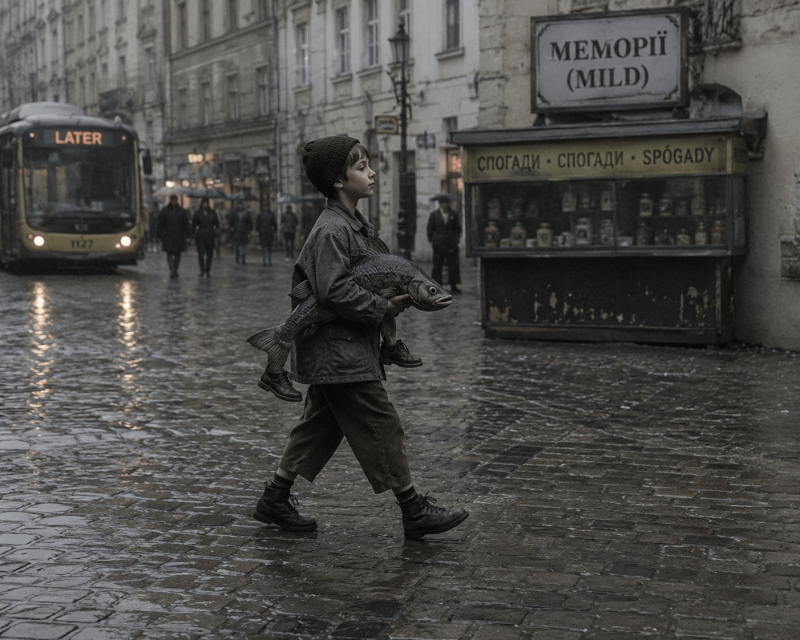
I had to leave Lviv this morning.
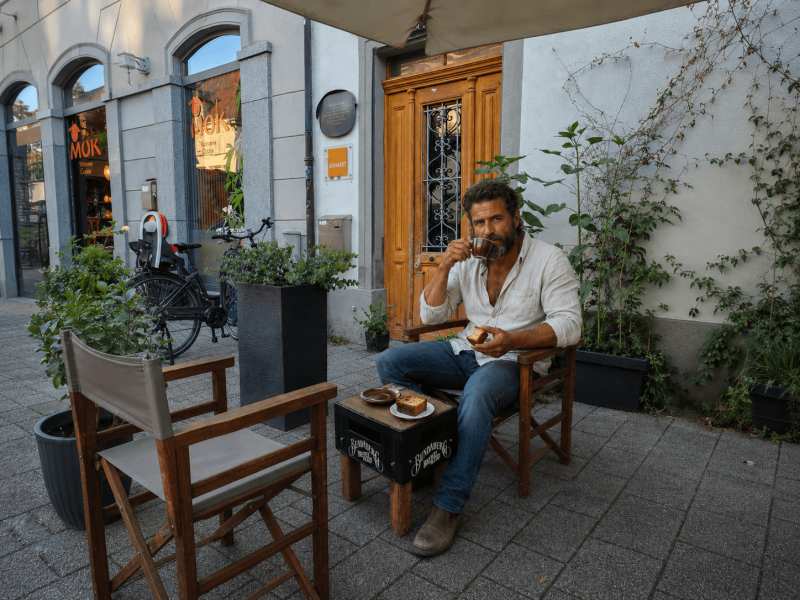
This was unfortunate because Lviv had coffee, pastries, familiar streets, and only the usual number of impossible doors.
Instead, the Clovis Institute sent me to two alternate Earths before lunch.
The first Earth was culturally almost identical to ours, except Turkish cuisine had conquered the world.
Not politically. Gastronomically.
Every city had simit bakeries, lokum shops, breakfast halls and at least three elderly men arguing over the correct thickness of baklava. Hamburg had more döner restaurants than office buildings. Tokyo had regional börek rivalries. Buenos Aires claimed to have invented menemen, which had caused a minor diplomatic incident.
Turkish food there occupied roughly the same position Italian food occupies in our world.
Everyone loved it. Everyone had an opinion about it. Everyone believed their local version was authentic.
I entered a breakfast café in a version of Vienna where the waiters wore embroidered waistcoats and silently judged anyone who ordered tea incorrectly.
“I would like Marco’s Breakfast, Version One,” I said.
The waiter looked at me.
“What is that?”
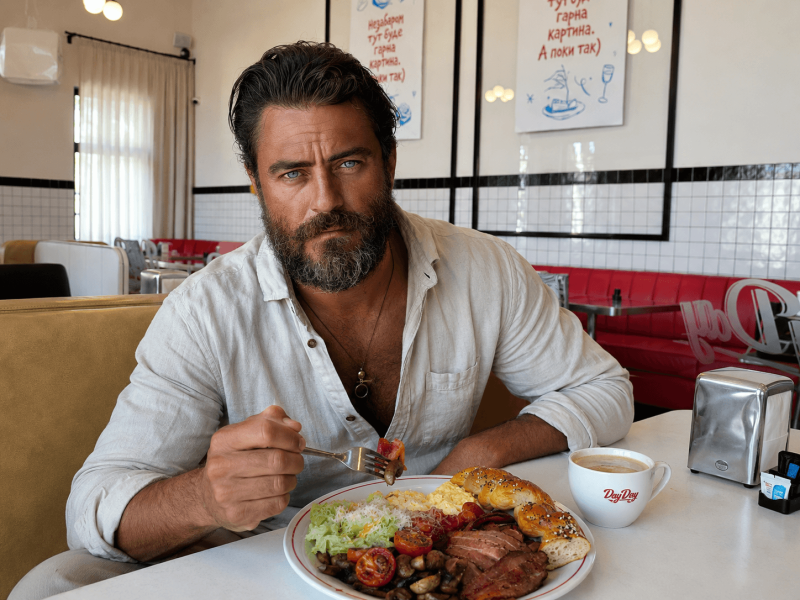
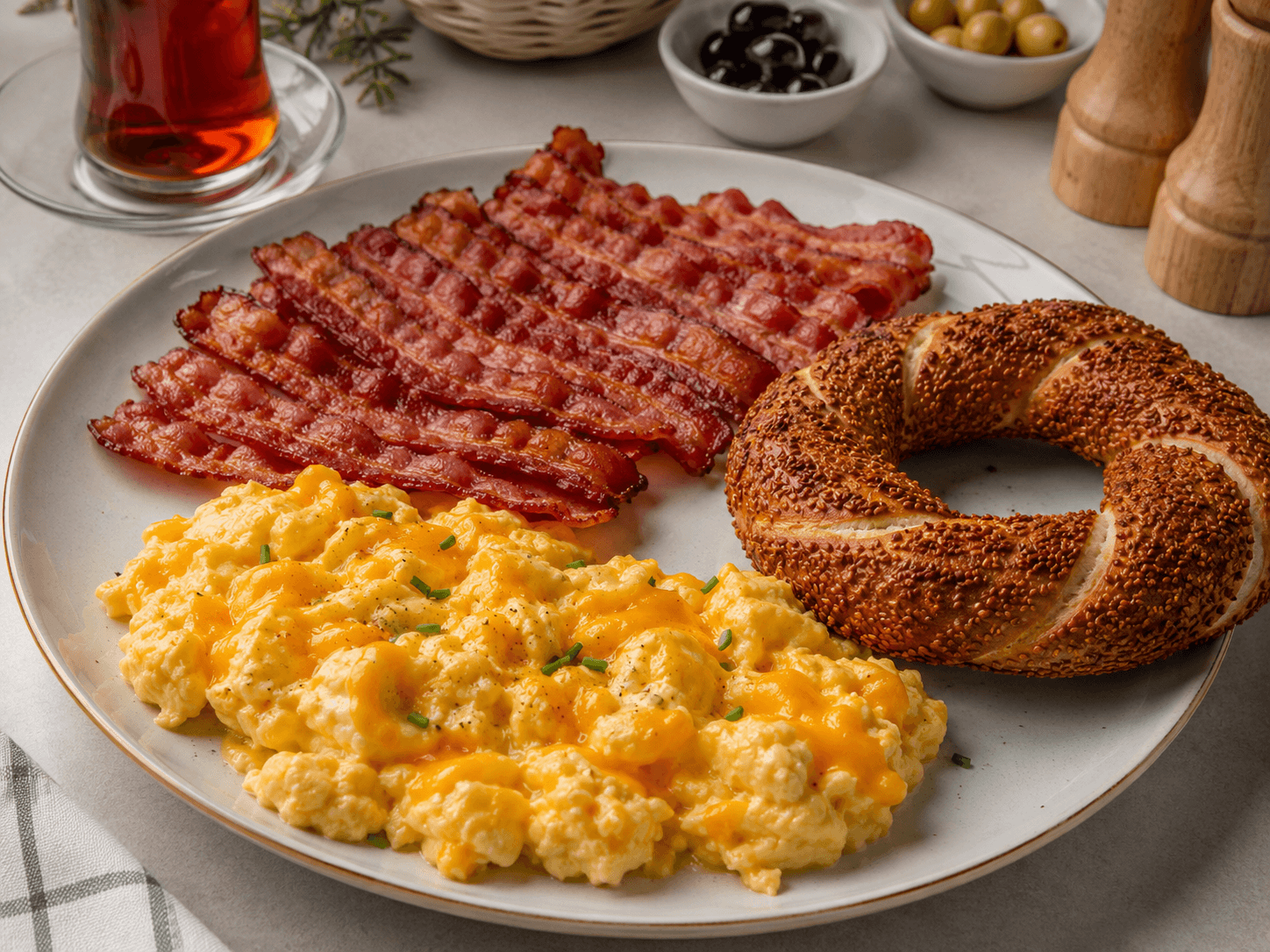
“Scrambled eggs with cheese. Twelve pieces of perfectly crisp bacon. One fresh simit.”
He stared at me for several seconds.
“Twelve?”
“Version One is still under development.”
They accepted the challenge.
What arrived twenty minutes later deserved its own small national anthem.
The eggs were soft, golden and folded into thick buttery clouds, with melted cheese running through them in bright orange ribbons. A little black pepper sat on top, along with chopped green herbs that made the plate look healthier than it had any right to.
The bacon had been arranged in a neat overlapping row. Twelve pieces, exactly. Crisp at the edges, glossy in the middle, and making that delicate crackling sound good bacon makes when you move it with a fork.
The simit was warm enough to steam when I tore it open. Its crust was dark gold, twisted and covered in toasted sesame seeds. Inside, it was soft, pale and slightly chewy.
There was also tea, olives, and two wooden pepper mills standing nearby like ceremonial guards.
I ate everything on the plate. The two pepper mills survived, though only because they looked difficult to chew.
This is what discipline looks like in the field.
My second assignment was on Earth VTR42AM, locally called Amaranth.
At first, its people appeared human.
They had cities, trains, markets, umbrellas and bureaucrats. They complained about weather, taxes and relatives. Entirely normal.
Then I noticed nobody blinked at the same time twice.
The Amaranthians were not individual organisms. Each person was a temporary colony of thousands of tiny translucent creatures called vesperlings. They assembled into human shapes because, several thousand years earlier, they had decided hands were useful and faces made trade negotiations easier.
The problem was that the mayor of Keth had vanished during a public speech.
Not kidnapped.
Dissolved.
Halfway through announcing a new bridge, his left arm became a flock of glowing insects, his torso collapsed into mist, and the rest of him escaped through a ventilation grille.
This had created a constitutional crisis.
The opposition claimed he had resigned.
His supporters claimed he was still mayor, merely distributed.
The city council had spent three days arguing whether a person occupying six kilometres of drainage pipe could legally sign documents.
I inspected the podium and found a small heating coil beneath it.
Vesperlings disliked sudden warmth. Someone had placed the coil there to scatter the mayor during the speech.
A political attack.
Except the coil had not been connected to electricity.
It had been connected to the applause meter.
The louder the crowd clapped, the hotter the podium became.
The mayor had sabotaged himself.
He had recently become unpopular and expected weak applause. The device was meant to produce extra steam around him, creating what his campaign manager called “an atmosphere of historic warmth.”
Instead, the crowd applauded enthusiastically because they mistakenly believed the speech had ended.
The mayor panicked and dispersed into the ventilation system.
I solved the crisis by opening every municipal air vent and playing the city anthem backwards. Apparently vesperlings find reversed brass music deeply irritating.
The mayor reassembled inside a fountain.
He was missing one shoe and most of his moustache, but constitutionally intact.
Before returning to Lviv, I tried Amaranth’s famous blue coffee.
It was served in a clear glass and glowed faintly from within.
It looked like something used to clean reactor components.
The first sip tasted surprisingly pleasant: roasted hazelnut, dark chocolate, cinnamon and something cool at the end, almost like mint.
The second sip made my shadow point in the wrong direction.
The third caused the waiter to ask me politely whether I had always had two reflections.
I stopped there.
Back in Lviv by evening.
One successful breakfast. One restored mayor. One temporarily disobedient shadow.
A productive day, by Institute standards.