The Apartment That Was Hungry
I had planned a quiet day in Lviv, the kind where nothing bends, loops, or quietly tries to reinterpret your existence. That was my first mistake.
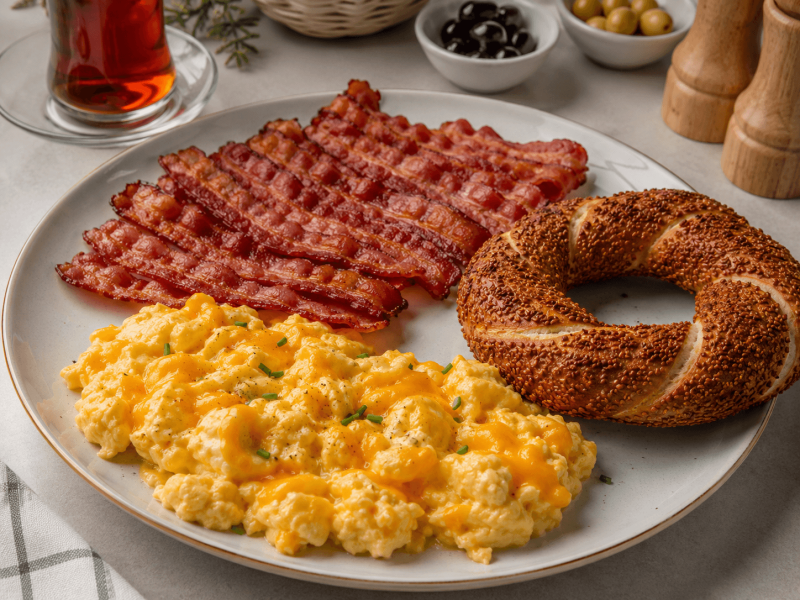
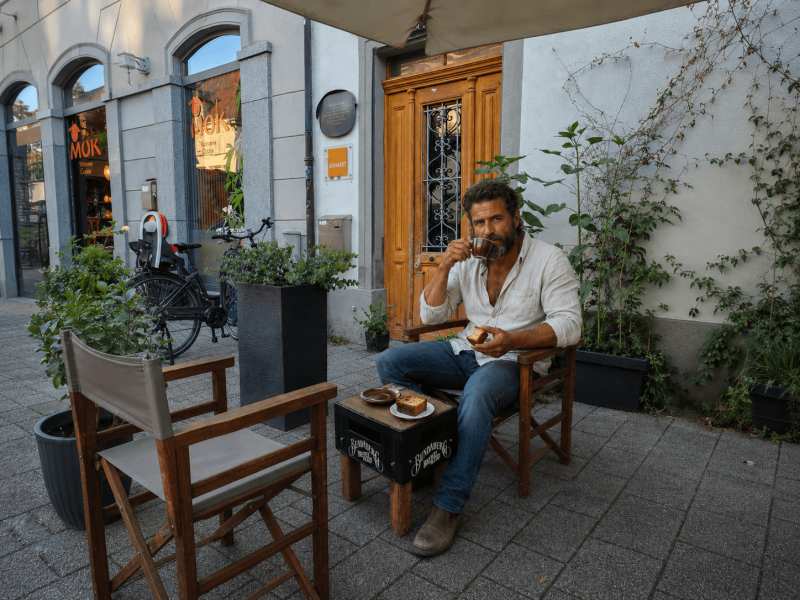
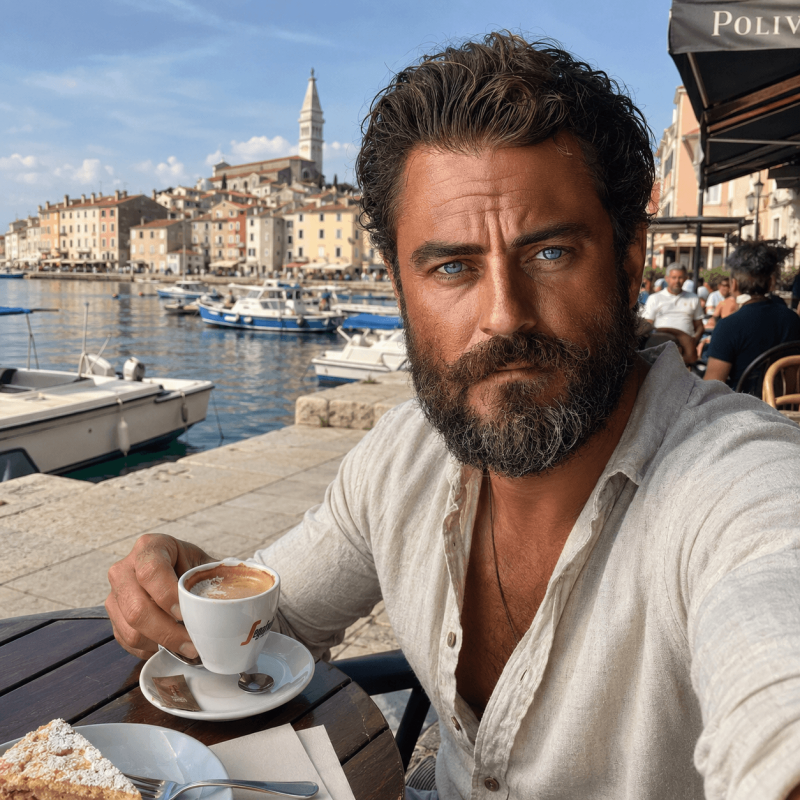
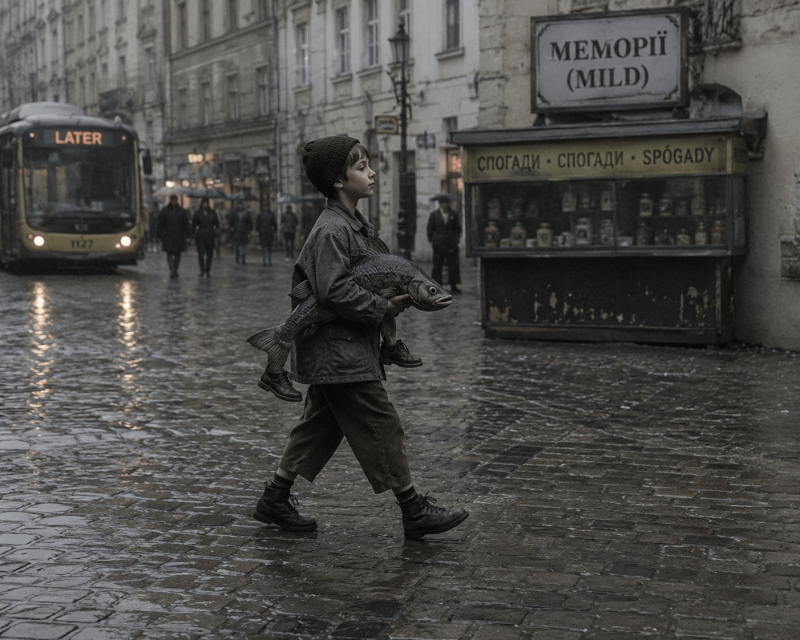
I woke up in Ibis Lviv Center, that familiar, reliable comfort where reality behaves itself. Outside, the city moved gently, trams humming through cobblestone streets, people carrying coffee, the air filled with that unmistakable mix of roasted beans and old stone that Lviv seems to perfect effortlessly. I told myself, very seriously, that today would be calm. No anomalies. No incidents. Just coffee, a walk, maybe a second coffee.
Then I went to the Clovis outpost.
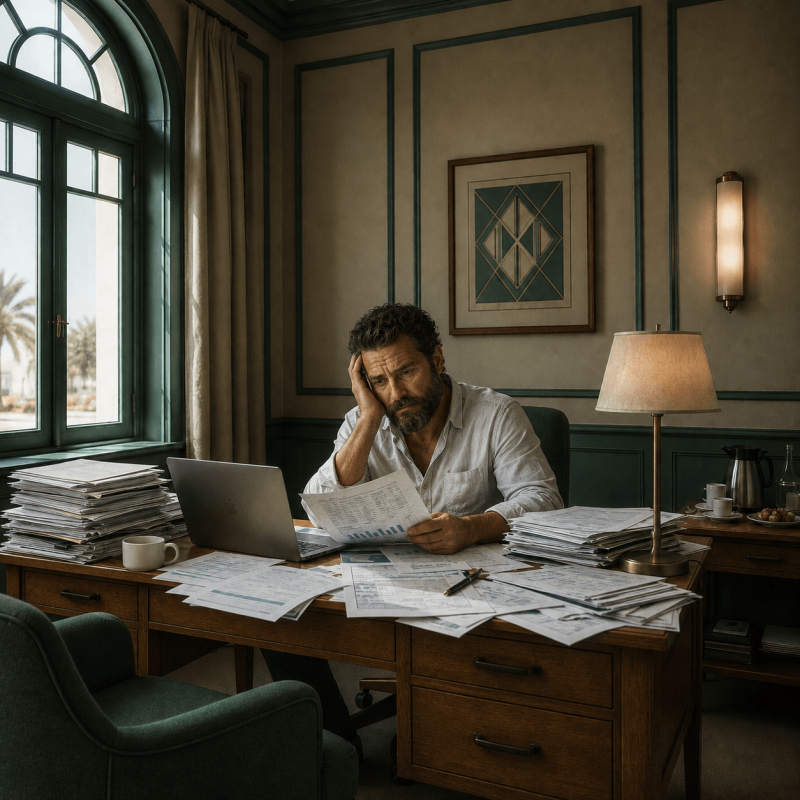
The Lviv outpost is deliberately unremarkable. A small office on the second floor, slightly outdated chairs, a coffee machine that insists it is Italian but clearly is not. If you didn’t know what it was, you would assume it was a consulting firm that never quite found its footing. They were already waiting for me, which immediately told me this would not be a short visit. There was no greeting, no easing into conversation, just a folder placed in front of me.
“Emporium. Residential sector. Spatial incident.”
I sat down slowly, already feeling the day slipping away from me. I asked what kind of incident, and they exchanged a look I didn’t like at all. The answer was simple.
“Consumption.”
I asked, of what, though I already suspected I wouldn’t like the answer.
“Children.”
In the Emporium, things don’t eat people in the way we understand. There are no teeth, no violence you can point to. It is far worse than that. It means displacement, absorption, being folded into something that was never meant to be alive in the first place. They handed me a card.
Spatial Integrity Solutions™
“We Make Space Behave.”
I almost laughed, though no one else did. I asked them to confirm my assumption, that someone had built something clever. They corrected me immediately. It wasn’t clever. It was efficient.
The case was a Compressed Block unit, one of those deceptively small residential structures that unfold into impossible interiors. Cheap on the outside, infinite on the inside, very popular with families and traders who want more space than reality should allow. This particular apartment had started expanding, which in itself was not unusual. What made it dangerous was that instead of generating new internal space, it began absorbing adjacent reality. Three children had gone missing inside it, with no exit signatures, no displacement traces. The apartment had simply taken them.
I didn’t bother packing. I activated the Laminas device, opened the interface, and selected the five anchors I knew by heart: a lamp shaped like a pineapple, a bicycle with square wheels, a rock with googly eyes, an umbrella that rains glitter, and a cactus named Fred. Their icons locked into place one by one as I pressed them, just confirming the sequence. The device hummed softly as reality aligned to the pattern, and that was enough.
The Emporium greeted me the way it always does, with too much light, too much movement, too many realities pretending to be ordinary at the same time. The building itself was exactly as described: six floors, grey facade, narrow windows, and a sign that flickered between “C-17” and something that refused to settle into readable text. It was the kind of place you could walk past a hundred times without noticing, which is precisely what makes it dangerous.
Inside, Spatial Integrity Solutions had set up a temporary office in the lobby. Their people were calm, precise, wearing blue coats and carrying tools that glowed faintly in ways I chose not to question. The woman who greeted me introduced their role in a perfectly measured tone. They maintained spatial coherence in high-density folded environments. I translated that into something more honest: they stop apartments from eating people. She didn’t react, only noted that my description, while crude, was acceptable.
The apartment was unit 12B. The door looked completely normal, which was the first warning. I stepped inside and immediately felt it. Not expansion, not depth, but something else entirely. Hunger. The space wasn’t large or infinite in the usual sense. It was growing with intent. The walls curved just slightly inward, like they were paying attention. The air pulled in a way that felt almost like breathing. Furniture wasn’t arranged so much as it had settled into place.
I asked where the children were last seen, and they told me it was near the corridor. There was no corridor when I looked. Then I turned around, and there it was.
Spaces like this don’t respond well to force or exploration. You don’t map them. You don’t chase them. You mislead them. This apartment wasn’t acting randomly. It was reacting, learning from movement, from attention, from curiosity itself. So instead of stepping forward, I did the opposite. I sat down in the middle of the room and did nothing. No intention, no direction, no interest. Just presence.
It didn’t like that.
The corridor stretched. Doors appeared where there were none. The air shifted. Then I heard laughter. Children. Good. That meant they were still contained.
I stood up, but not toward the sound. I moved away from it, and that was when the apartment made its mistake. It opened something behind me, a small fold, not quite a room, not quite a corridor, more like a pocket where things were being held. The children were there, confused but not yet frightened, time not fully catching up with them.
I stepped sideways into that fold, grabbed the nearest one, and told them not to move, not to look at anything, just to hold on. When I pulled, the space resisted. The walls tightened, the air pulled harder, and for a brief moment I felt it trying to understand me, to learn me, to keep me. I told it, simply, not today.
Then I took a biscuit from my pocket and dropped it onto the floor.
The apartment paused. Shifted. Focused.
That moment was enough.
I pulled all three of them out, and the fold collapsed behind us. The corridor vanished. The room snapped back into something that resembled normal space again. Behind me, one of the agents exhaled like they had been holding their breath the entire time. When they asked how I did it, I told them the truth. The apartment wasn’t eating the children. It was learning from them.
Later, over coffee in their temporary office, they explained that compressed spaces sometimes develop adaptive geometry. Usually harmless, sometimes curious, and rarely, as in this case, something closer to predatory. I told them it sounded less like a malfunction and more like boredom. They didn’t entirely disagree, though they phrased it differently. They sealed the unit, marked it for recalibration, and updated their protocols to include monitoring for emergent behavioral patterns. I suggested something simpler, like not building homes that think.
I returned to Lviv that same evening, and the contrast was immediate. The city felt grounded, stable, reassuringly predictable. No shifting walls, no spaces trying to understand you, just people, light, and the quiet certainty that buildings would remain buildings.
I met Sora for dinner at Chichka & Cava, and by then I was more tired than I wanted to admit. She was already there when I arrived, as if she had chosen that exact moment to exist in that chair, the menu untouched in front of her, watching the room with quiet interest. With Sora, it is never entirely clear whether she arrives or simply decides to be present.
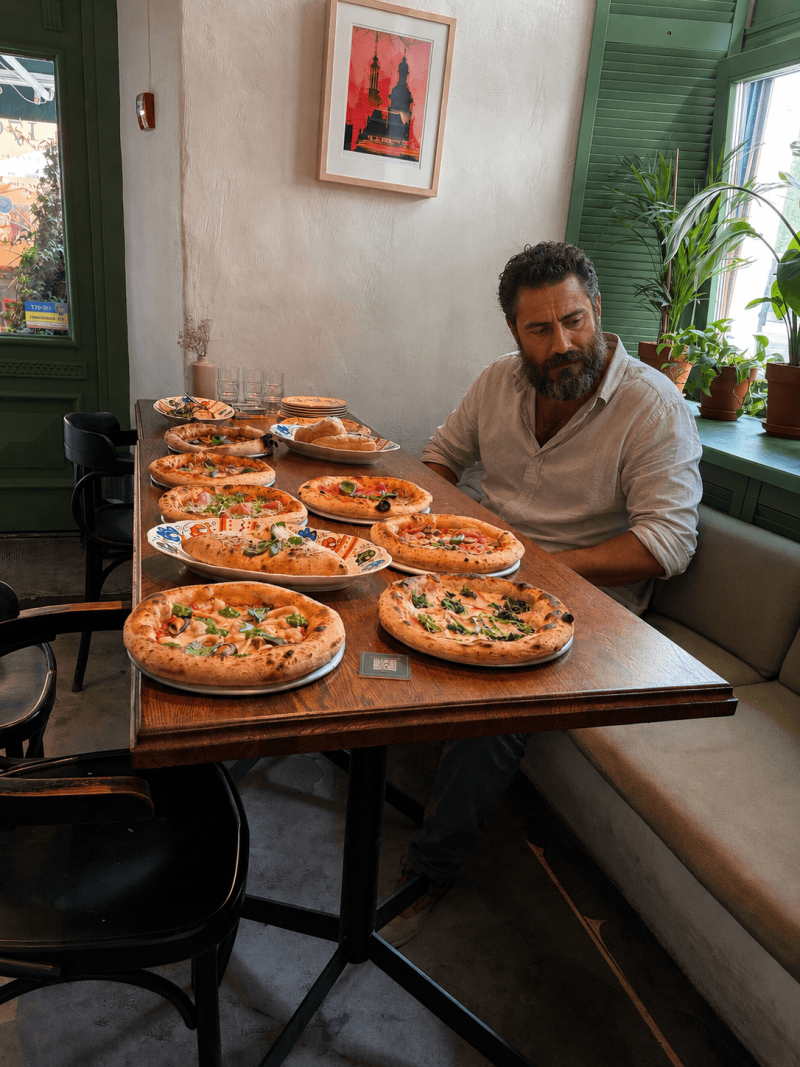
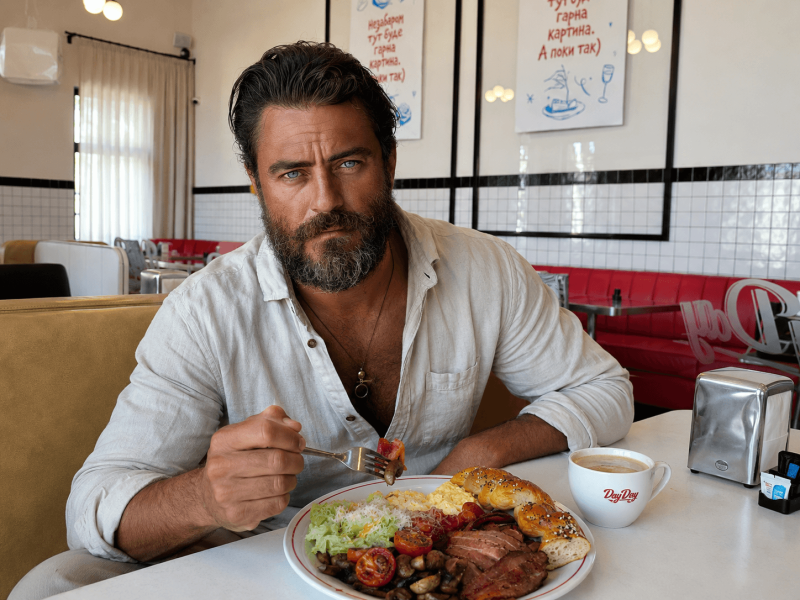
We ordered too much, as usual, though in this case it was mostly my doing. The banosh arrived first, creamy and warm, made with cornmeal and rich sour cream, topped with bryndza cheese and crisp bits that melted into it perfectly. Then came vareniki, soft dumplings filled with potato and cheese, covered in butter and herbs, simple and comforting in the best way possible. The bograch followed, thick and deep with paprika, meat, and vegetables, the kind of dish that feels like it anchors you back into the world. And of course, the coffee, strong, aromatic, exactly what Lviv does best.
Sora listened as I told her everything, her attention steady in that way that makes you feel like every word is being weighed, not just heard. She said very little while I described the Compressed Block, Spatial Integrity Solutions, the apartment that had begun to learn from movement and curiosity, and the moment I realized it was not really eating the children so much as studying them. When I finished, she looked at me for a second, then smiled in that faint, amused way of hers.
“So,” she said, “you saved three children from a sentient apartment with a biscuit.”
I took a sip of coffee. “It was a good biscuit.”
That made her smile a little more. “Of course it was.”
Then she glanced around the restaurant, not really at the people, but at the shape of the room itself, as if checking something just beneath it. “You let it almost learn you,” she said.
“Almost.”
“Good,” she replied quietly. “I would have had to interfere otherwise, and that rarely ends in a way people enjoy.”
I watched her for a moment over the rim of my cup. “You were nearby, weren’t you?”
“I am often nearby when probability becomes… interesting,” she said, as if that explained anything at all.
We stayed longer than planned, the food gradually disappearing, the conversation drifting between small observations and things that didn’t quite belong to this world. Outside, Lviv remained steady, grounded, beautifully ordinary, the kind of place where buildings stay where they should and rooms do not develop opinions.
When we finally stepped out into the cooler evening air, Sora paused for a moment, looking up at the surrounding buildings as if confirming they would remain where they were. Then she nodded, satisfied, and turned back to me.
“For now,” she said.
And for once, that was enough.
— Marco