The Sunday Before Budapest
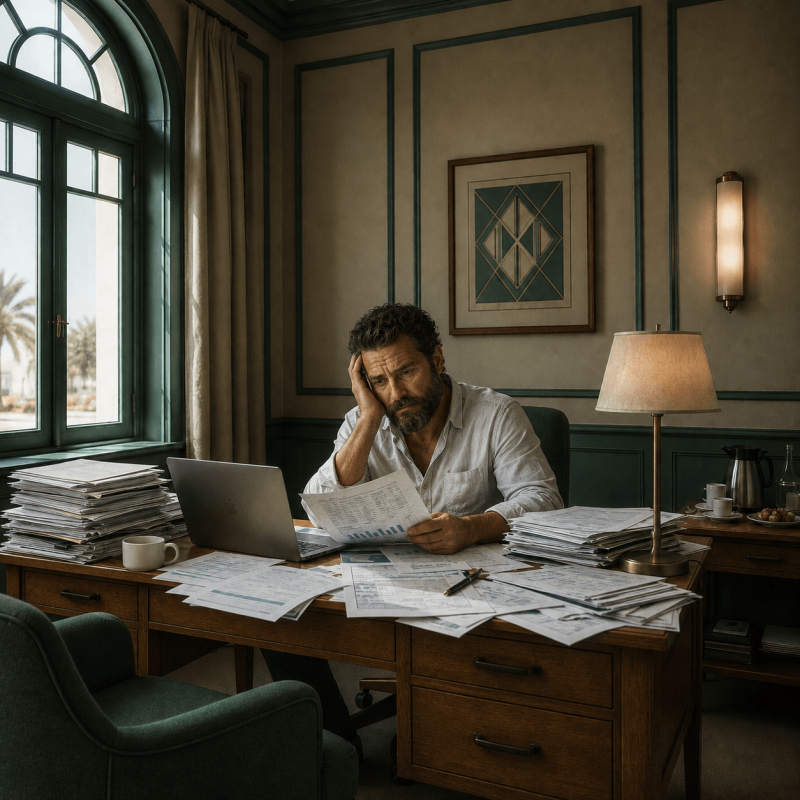
There are two kinds of messages you never want to receive on a quiet morning.
The first is from a tax authority.
The second is from a professor in Budapest who begins with, “Marco, I hope this finds you well.”
Nobody who hopes you are well has ever followed that sentence with anything good. In my experience, it is usually followed by one of three things: a request to look at a medieval manuscript that screams at librarians, a polite invitation to examine a railway platform that exists only on Tuesdays, or the discovery of a harmless anomaly which has already eaten two doctoral students and a vending machine.
This professor is an old acquaintance, which is the academic word for “someone who knows exactly which disasters you have survived and still writes to you anyway.” He asked if I could come to Budapest. I agreed, because I am a professional, because I am kind, and because apparently my survival instinct has the same reliability as roaming data in the Balkans.
The plan was simple. Night train in the evening. Sleep on the way. Arrive in Budapest with the calm face of a man who has not been dragged into a paradox before breakfast.
So naturally, I spent today doing absolutely nothing heroic.
I slept late.
This may not sound impressive, but for me it is practically a spiritual retreat. I have slept in collapsed towers, under market stalls, in a monastery where the bells rang every seven minutes for reasons never explained, and once in a dimension where pillows were illegal because dreams were taxable. Sleeping late in Lviv, in a normal bed, with no one shouting “Sir, the portal is looking at us,” felt like luxury.
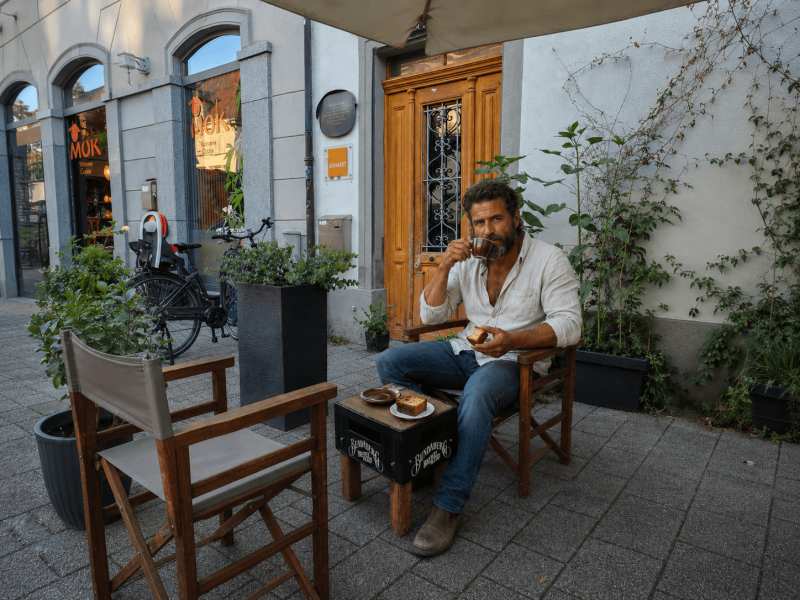
Eventually I performed the ancient ritual of becoming human: I found trousers, checked that I had not packed the wrong century, and went to Svit Kavy for breakfast.
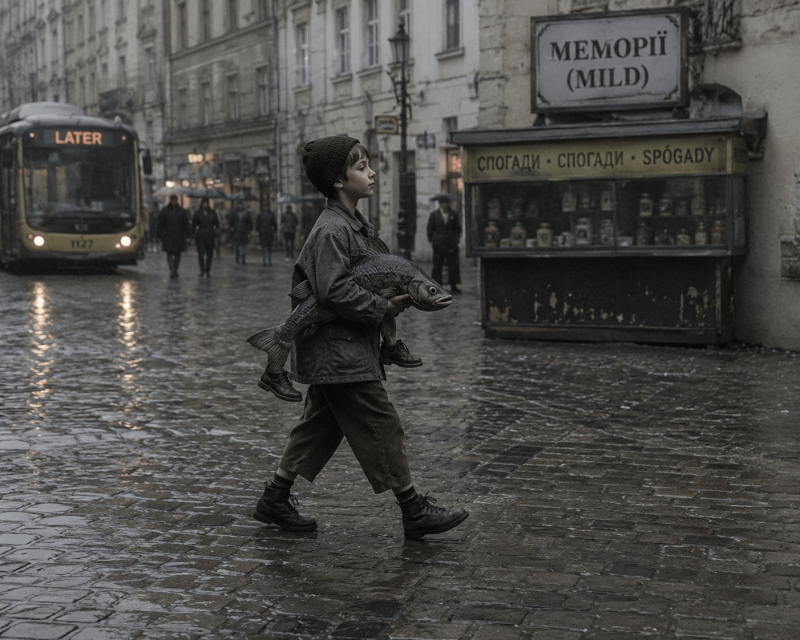
Lviv on a Sunday morning has a very particular kindness. It does not rush you. It lets you pretend that the whole world is only old façades, tram wires, soft light, and people carrying flowers for reasons that are none of your business. The city was doing its best impression of peace, and I was polite enough to believe it.
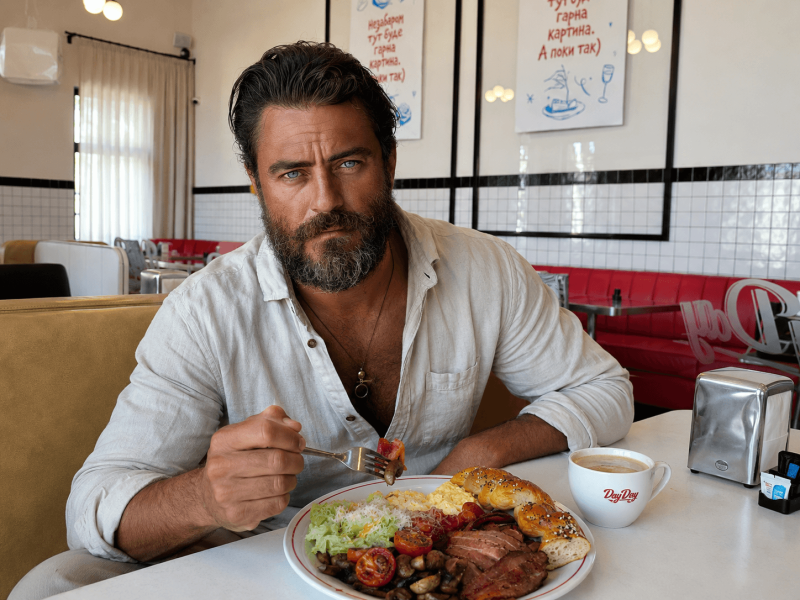
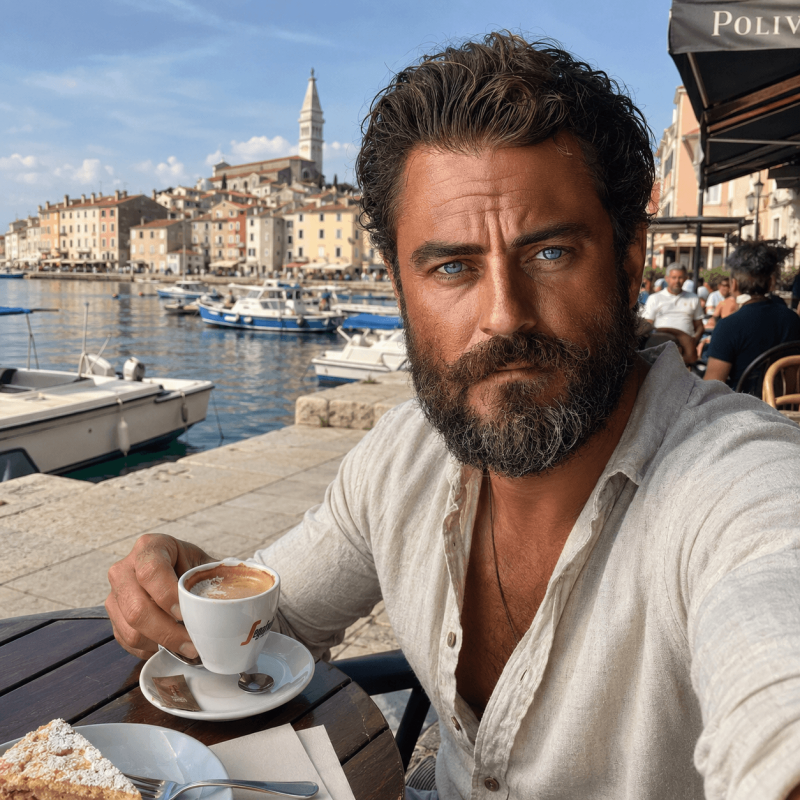
Svit Kavy was exactly what I needed: coffee seriousness without military aggression. A place where the beans are respected, the breakfast has structure, and nobody looks at you strangely if you order coffee in a sequence rather than as a beverage.
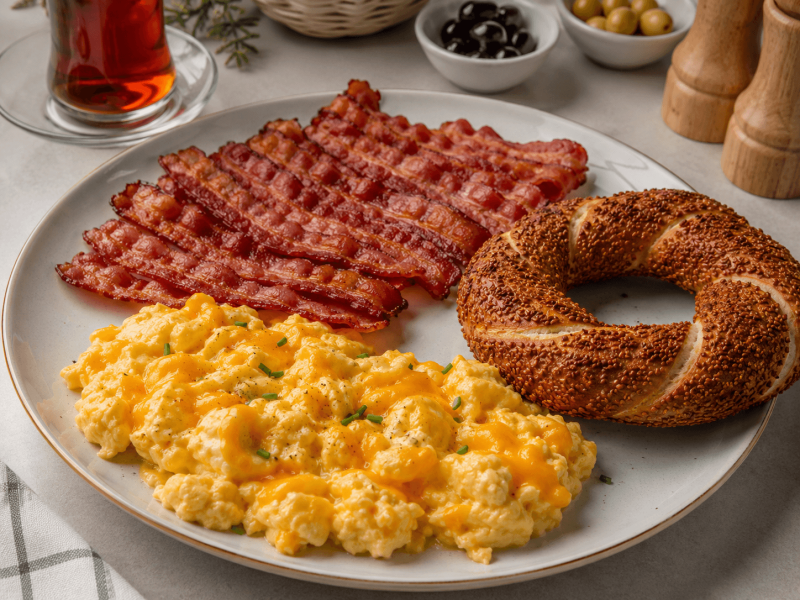
I chose the French breakfast with salmon, because when a plate offers salmon, avocado, goat cheese in ash, cherry-cranberry sauce, egg, butter and a croissant, it is not breakfast. It is a diplomatic treaty between France, Ukraine, and my appetite. The croissant arrived with the fragile confidence of something that knows it will be destroyed beautifully. The salmon was delicate, the goat cheese had that earthy little dramatic note, and the sauce gave the whole plate a tiny red spark, like someone had hidden a sunset in it.
First coffee: flat white. Sensible. Civilized. A handshake with reality.
Second coffee: V60. This is the coffee you order when you want to hear the bean’s childhood story.
Third coffee: I considered it, which is spiritually the same as ordering it, but I was trying to remain train-compatible.
There are days when coffee tastes like fuel. This was not one of them. This was coffee as architecture. Coffee as cathedral dust and morning bells. Coffee as proof that even in a broken universe, someone still knows how to pour water in a circle.
After breakfast I walked.
Not marched. Not investigated. Not followed a suspicious old woman into a side street because her shadow was moving three seconds late. Walked.
I passed shop windows, old stone, doorways that looked as if they had overheard history and chosen not to comment. I bought souvenirs, because apparently I have become the sort of immortal wanderer who thinks, “Yes, this tiny object will survive being dropped through six realities and still remind me of a nice afternoon.”
I bought a few little gifts, one postcard I will probably never send, and a small thing I absolutely did not need but which had the powerful argument of being charming.
Then, because Lviv contains both old-town poetry and modern retail gravity, I went to Forum.
Forum Lviv is one of those malls that always makes me feel slightly watched by the Emporium. Not in a bad way. More like a cousin. A local, well-behaved cousin who has normal escalators and does not contain a shop where mannequins ask you about your childhood.
I walked through the clean modern light, past clothes, cosmetics, electronics, cafés, people with bags, people with missions, people who had clearly entered for one item and were now carrying six. Malls are very honest places. Churches tell you to examine your soul. Malls show you exactly what your soul thinks of discounted socks.
I bought something practical. Then something not practical. Then I remembered that my bag for Budapest was not an interdimensional cargo bay, despite what it has survived, and stopped.
By then lunch had become not a desire but a legal requirement.
So I went to Rebernia Pid Arsenalom.
There are restaurants that ask politely what you would like.
Rebernia says: here is fire, here are ribs, your civilization has ended, use your hands.
I respect that.
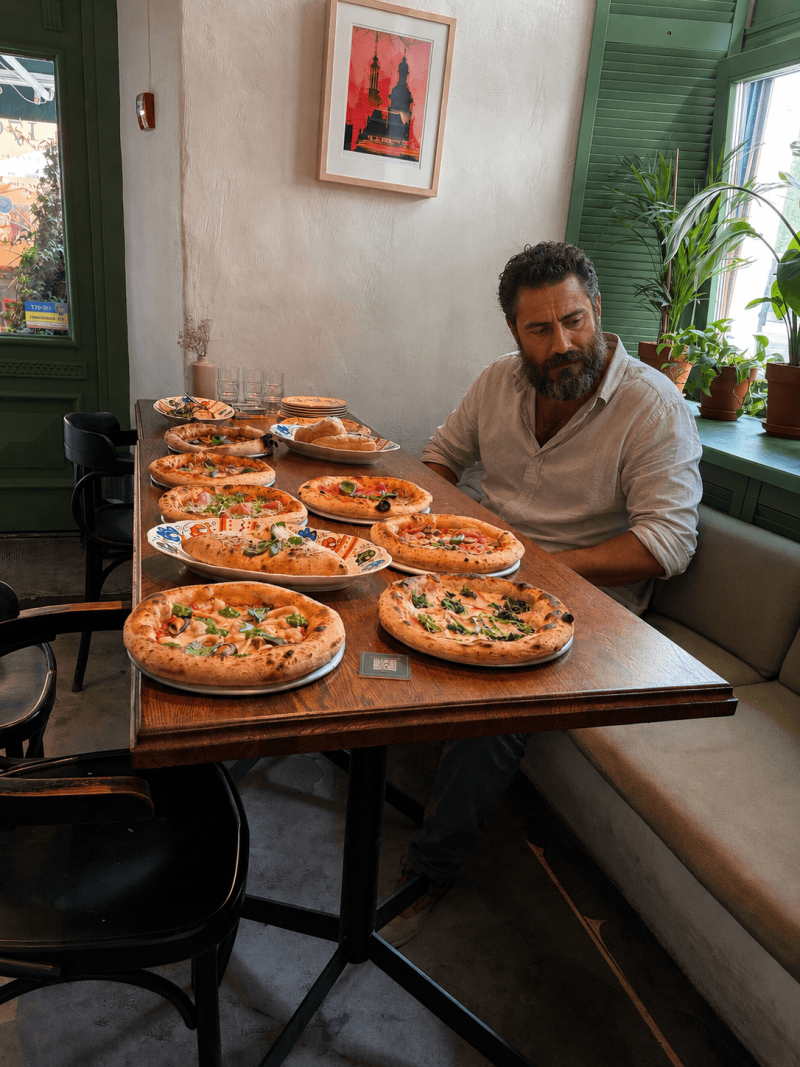
The place has the energy of a medieval hall that discovered branding, napkins, and excellent meat. Smoke, noise, laughter, wooden tables, people leaning into the serious business of ribs. No delicate philosophical distance between you and lunch. No tiny fork to suggest morality. Just ribs cooked over open fire, sticky fingers, and the quiet understanding that dignity is optional when the sauce is correct.
I ordered ribs on fire, because that is the point of being alive.
They arrived with the kind of aroma that makes ancient instincts sit upright. The meat had that smoky edge, the caramelized crust, the tenderness that makes you stop talking mid-sentence. I have negotiated with machine kings, crossed deserts made of glass, and once argued with a moon that wanted custody of a lighthouse. None of that prepares a man for the first bite of properly cooked ribs when he is hungry.
A waiter passed. Someone laughed too loudly. Somewhere behind me a group was making the happy, chaotic sounds of people trying to eat with their hands while pretending they were still elegant.
I was not elegant. I was sincere.
After lunch I walked again, slower this time, because ribs create philosophy in the knees.
The city had shifted into afternoon. Softer light. More people. The streets had that Sunday feeling of time stretching itself like a cat in a window. My professor in Budapest was somewhere far away, probably standing near a chalkboard, pretending that whatever he had found was “interesting” rather than “Marco, bring the device and maybe holy water.”
I checked the train time. Still fine.
I checked my bag. Still there.
I checked reality. Mostly acceptable.
This is as good as travel preparation gets.
For afternoon coffee and sweets, I went to Respublika Sadu.
The name already sounds like a small independent nation founded by people who believe in cake, plants, and not shouting. It is tucked into the quiet center in that very Lviv way, where a place can feel discovered even if half the city knows it. It has the atmosphere of somewhere you could meet a friend, work for an hour, have a date, or quietly decide not to answer emails from professors.
I ordered coffee and a Basque cheesecake.
The cheesecake had that soft, burnt-top confidence. Not flashy. Not silly. Just creamy, deep, and persuasive. The kind of dessert that does not need to shout because it knows you will return to it with the spoon.
I sat there for a while and let the day be small.
That is harder than it sounds.
When you have seen too many worlds, peace can feel suspicious. A quiet café becomes a possible trap. A friendly waiter may be a disguised envoy from a timeline where spoons developed monarchy. A normal door might open into a courtroom in 1483 where everyone is very angry about your boots.
But not today.
Today was just coffee. Cheesecake. A soft chair. Lviv outside. A train later. Budapest tomorrow.
For a few minutes, I allowed myself the dangerous thought that perhaps the universe was not planning anything.
Then I laughed quietly, because I am optimistic, not stupid.
From Respublika Sadu, I drifted toward Dzyga, because one dessert is sensible and two desserts are logistics.
Dzyga is not merely a place. It is a cultural organism with tables. Gallery, café, bar, restaurant, shop, conversation, art, and that pleasant creative disorder which tells you everyone here has had an idea too large for normal furniture.
Some places decorate walls.
Dzyga makes the walls look as if they are waiting to join the discussion.
I ordered panna cotta first, because I had seen it on the menu and because the words “second dessert” are not a confession. They are a strategy. It was smooth and cool, the sort of dessert that arrives looking innocent and then quietly repairs part of your soul. Panna cotta is a calm food. It does not ask questions. It does not accuse. It simply exists, wobbles slightly, and forgives you.
Then, because time had folded in that strange Sunday way and because my night train required me to sleep rather than hunt for food at the last minute, I stayed for an early dinner.
At Dzyga, this felt natural. You can arrive for a dessert and accidentally become part of the furniture for an hour. I chose something hearty enough to count as preparation for travel, but not so heavy that the train compartment would become a private tragedy. The food was good, the room had that lively intellectual warmth, and somewhere in the background I felt the old familiar sensation of people thinking dangerous artistic thoughts near soup.
This, frankly, is why I like Lviv.
It understands that beauty and practicality are not enemies. You can have old stones and good coffee. Souvenirs and ribs. A modern shopping mall and a café that feels like a secret. Art and dinner. A Sunday that starts with salmon breakfast and ends with panna cotta in a place where creativity has clearly been left unsupervised.
By early evening, I returned to the room with the soft exhaustion of a man who had done nothing heroic and done it thoroughly.
I laid out my things for the train: documents, charger, headphones, the Brama and Laminas devices, a notebook, the professor’s message, and one souvenir that might be a magnet or a very tiny ceremonial shield. I have stopped asking these objects what they want to be.
Budapest waited.
I have a complicated relationship with Budapest. It is a beautiful city, yes. It also has a habit of involving me in events where someone says, “This is probably symbolic,” ten minutes before the ceiling opens. I once had a misunderstanding there involving a monastery cellar, three clocks running backward, and a man who insisted I was his grandfather despite being older than me by at least two wars.
Still, Sunday had been kind.
Svit Kavy gave me breakfast and proof that civilization still functions.
Forum reminded me that shopping malls in this world are mercifully finite.
Rebernia gave me ribs and removed any illusion that I am above sauce.
Respublika Sadu gave me quiet.
Dzyga gave me panna cotta, art, dinner, and the sense that chaos can be friendly if it is well lit.
So I did the most responsible thing possible.
I did not investigate any strange noises.I did not follow any glowing alley.I did not answer the professor’s second message, which began with the deeply alarming words, “One more small detail.”
Instead, I packed the bag, checked the ticket, looked once more around the room like a man making sure he had not forgotten either his charger or his sense of doom, and ordered an Uklon to the railway station.
Lviv rolled past the window in evening lights, old buildings, tired pedestrians, and that soft city glow that always makes departure feel slightly theatrical. At the station, I found my platform, my carriage, and my compartment with no visible portals, symbols, cultists, or suspiciously intelligent pigeons.
A promising start.
I climbed aboard, placed the bag where it would not fall on my head during the night, arranged myself into the narrow train bed with the dignity of a folded map, and decided that Budapest could wait until morning.
For now, the train was moving, the professor was far away, and I was choosing to believe that the most dangerous thing I would encounter before sunrise was railway tea.
I know.
I admire my courage too.